
When I first heard about ETFs, I thought they were complicated instruments meant only for professionals. Over time, I realized they are actually designed to make investing simpler, calmer, and more structured. This guide on Financier Mind explains investing from absolute basics to advanced understanding, with a human touch and practical clarity.
This article is purely educational. It is meant to help you understand ETFs so you can think clearly and confidently about finance.
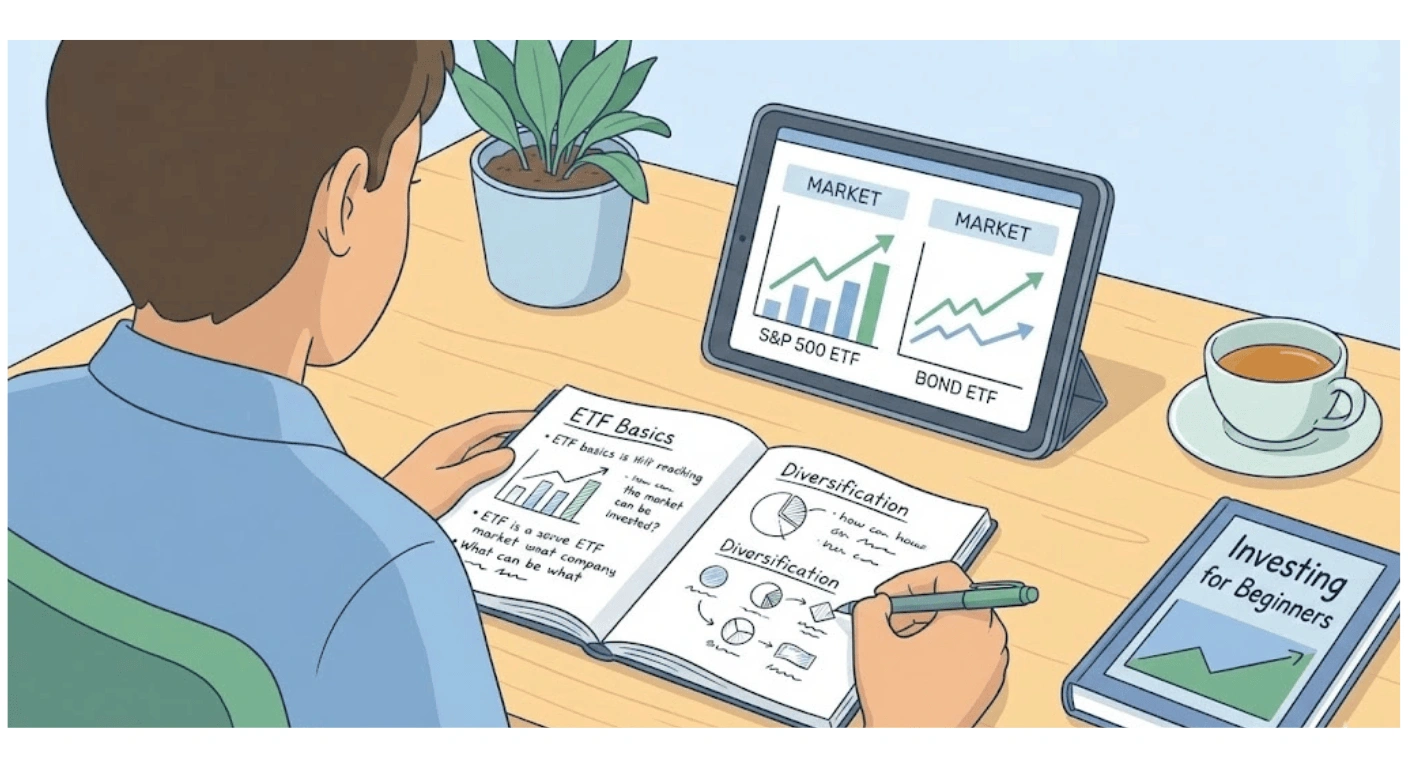
What are they, explained simply? Learn how ETFs work, their types, risks, and why investors prefer them.
What Are ETFs?
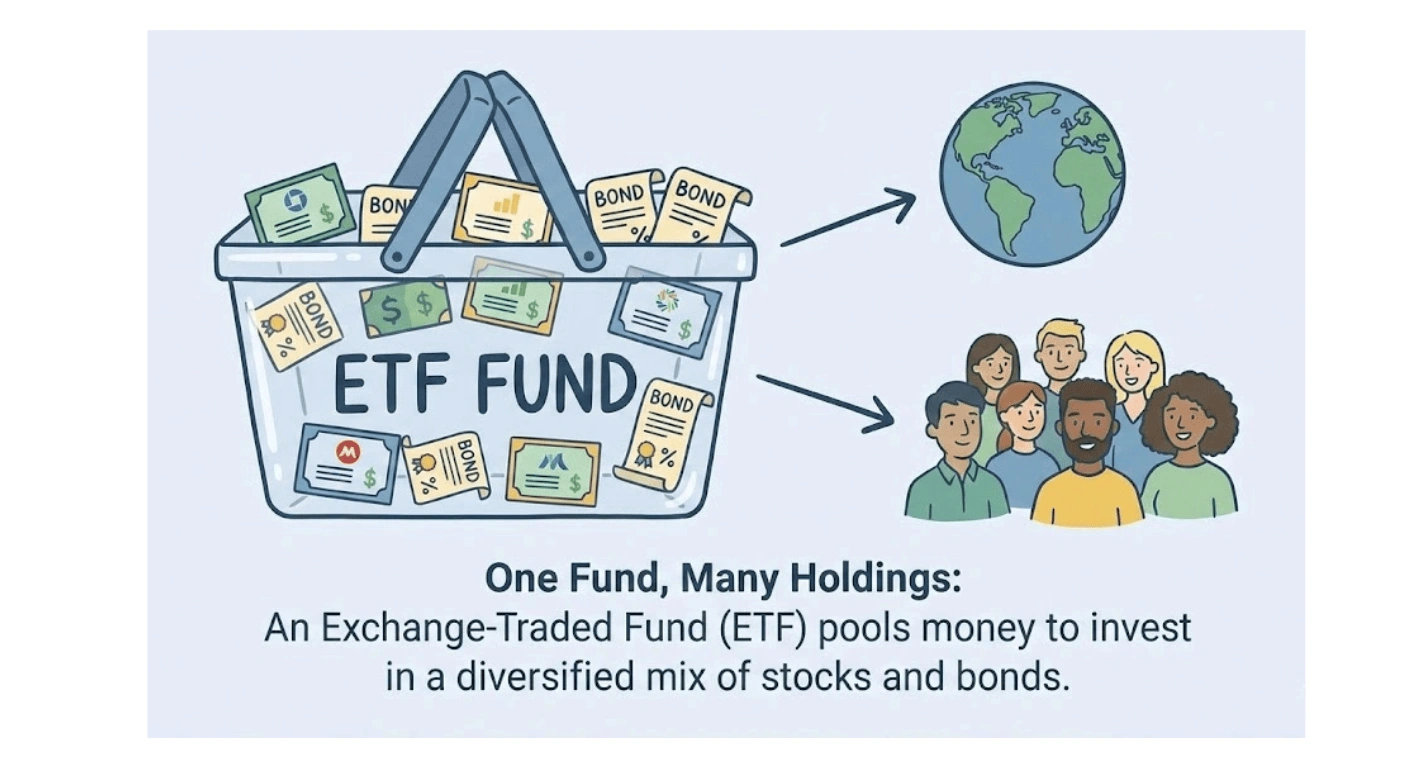
ETF stands for Exchange Traded Fund. It is an investment fund that is traded on the stock exchange, just like a share.
When you buy an ETF, you are buying a basket of assets. These assets may include shares, bonds, commodities, or a mix of many investments.
They were created to provide investors with diversification, transparency, and flexibility in a single product.
Why ETFs Were Created
They exist to simplify investing.
Instead of buying many individual shares, an investor can buy one ETF and gain exposure to multiple companies or assets.
They reduce complexity, cost, and emotional pressure.
How They Work Step by Step
- The provider creates a fund that tracks an index or asset.
- It is listed on a stock exchange.
- Investors buy and sell it during market hours.
- The price changes based on demand, supply, and underlying asset value.
This structure makes it transparent and easy to track.
ETF vs Mutual Fund
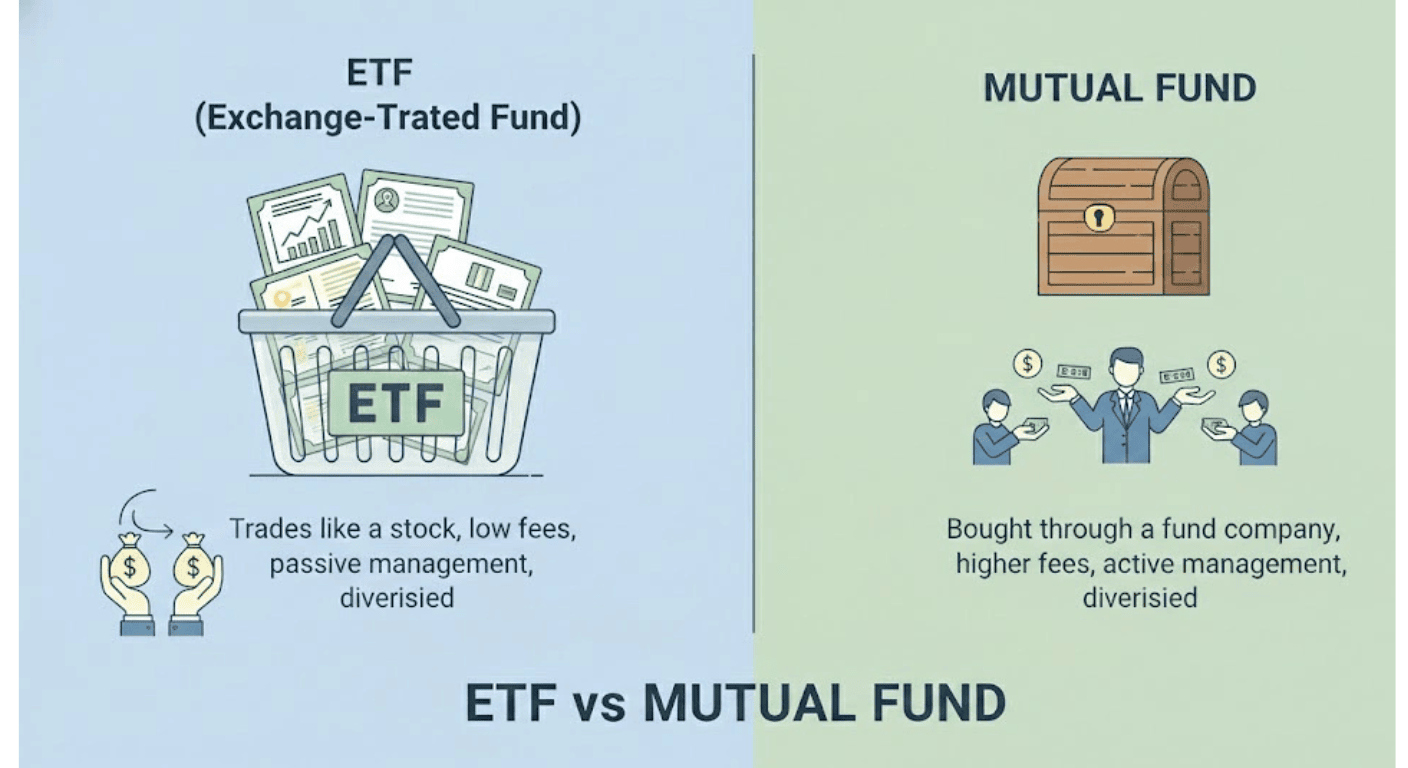
ETFs and mutual funds both pool investor money.
ETFs trade like shares.
Mutual funds are bought and sold at end-of-day NAV.
ETFs usually have lower costs and more flexibility.
ETF vs Shares
Shares represent ownership in one company.
ETFs represent ownership in many companies.
Shares carry company-specific risk.
ETFs spread risk across assets.
Types of ETFs Explained Simply
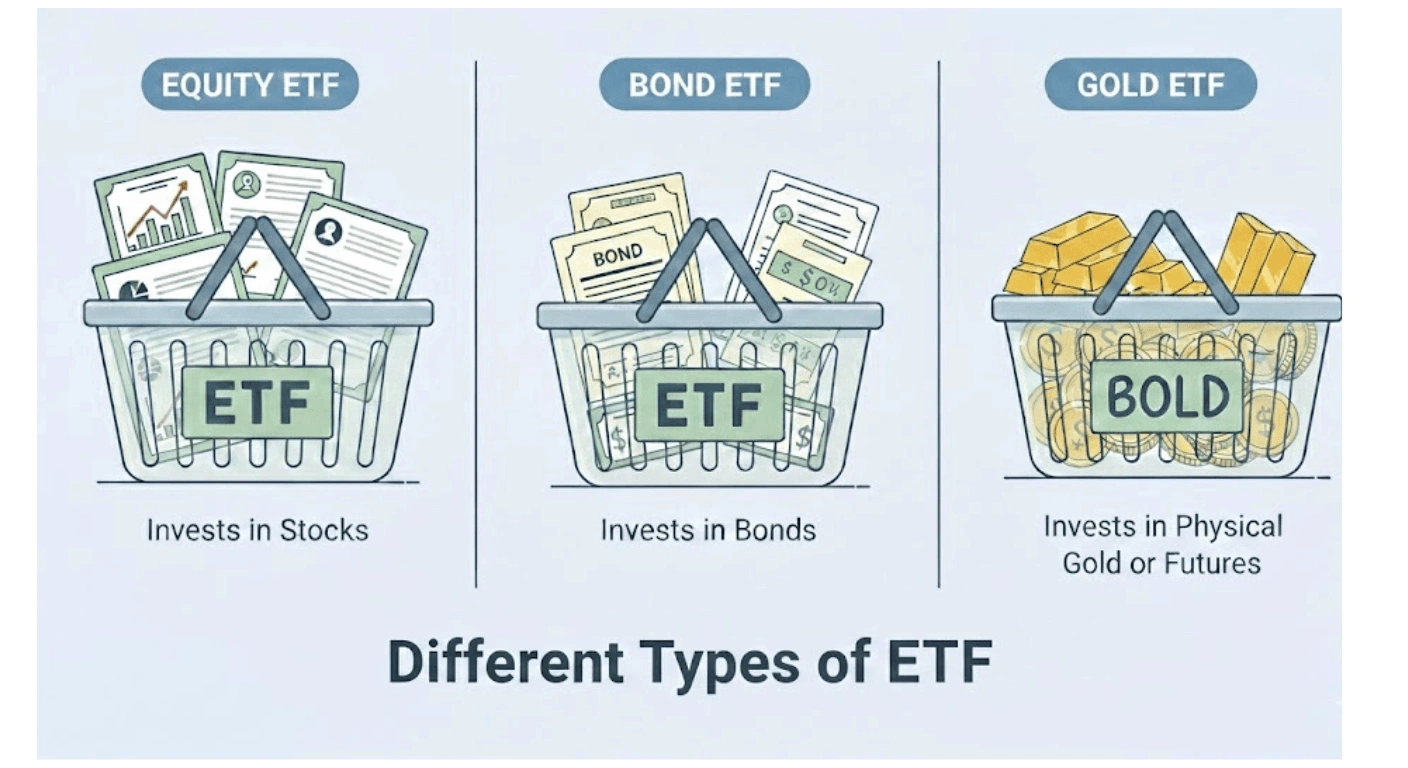
There are different types of ETFs based on investment goals.
Equity ETFs track stock market indices.
Bond ETFs focus on fixed-income instruments.
Commodity ETFs track gold, silver, or oil.
Sector ETFs focus on specific industries.
Each ETF type serves a unique purpose.
Equity ETFs for Beginners
Equity ETFs are popular among beginners.
They track broad indices.
They reduce stock selection stress.
They help investors participate in market growth calmly.
Bond ETFs and Stability
Bond ETFs focus on income and stability.
They are less volatile than equity ETFs.
They suit conservative investors.
They help balance portfolios.
Commodity ETFs Explained
Commodity ETFs track physical assets.
Gold ETFs are commonly used for hedging purposes.
They protect against uncertainty.
They add diversification.
How ETFs Are Traded
They are traded during market hours.
You need a demat and trading account.
They can be bought and sold anytime during the day.
This flexibility attracts active and passive investors.
Cost Structure of ETFs
They usually have low expense ratios.
They reduce management costs.
Lower cost improves long-term returns.
Cost efficiency is a major advantage of ETFs.
Risks Involved in ETFs
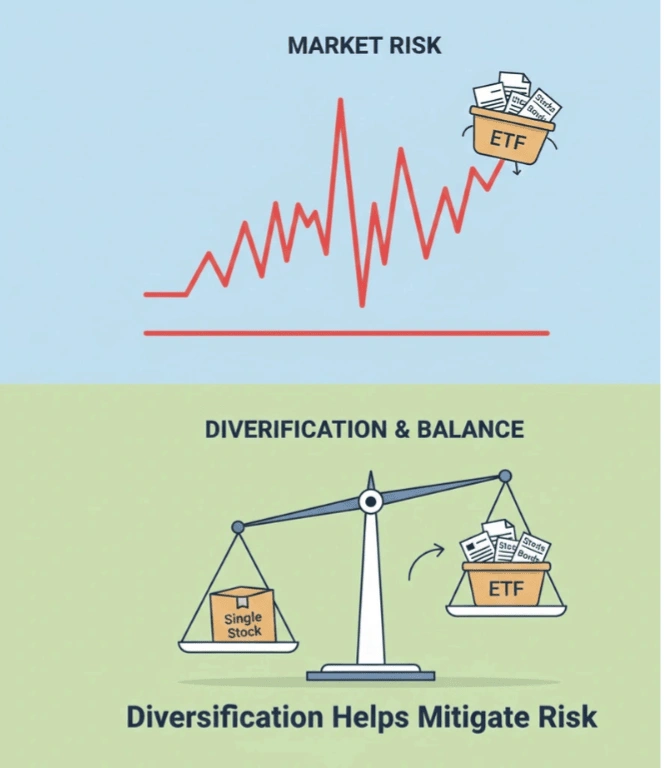
They carry some risk.
Its prices are impacted by market risk.
Errors in tracking could happen.
They differ in terms of liquidity.
Comprehending risk enhances the use of ETFs.
Understanding risk management improves ETF use.
ETFs and Market Psychology
Emotional trading is lessened by ETFs.
Overtrading is discouraged.
They encourage prudent investing.
Investing calmly produces better results.
ETFs for Long-Term Wealth
Long-term investors benefit from ETFs.
They are in favor of compounding.
They make managing a portfolio easier.
Advanced View on ETFs
Advanced investors use ETFs strategically.
They rotate sectors.
They hedge portfolios.
They manage asset allocation efficiently.
They become tools, not just products.
ETFs in Indian Market
In India, ETFs track indices and assets.
They are regulated.
They offer transparency.
Indian investors increasingly prefer ETFs.
ETF vs SIP Concept
ETFs can be bought through a SIP(Systematic Investment Plan).
You can invest regularly in ETFs.
This combines ETF efficiency with SIP consistency.
Common ETF Mistakes
Buying without understanding the index.
Ignoring liquidity.
Chasing short-term trends.
Avoiding these mistakes improves results.
Are ETFs Suitable for Beginners?
Yes, they are beginner-friendly.
They reduce complexity.
They improve diversification.
They encourage long-term thinking.
Final Verdict

ETFs are simple yet powerful.
They remove unnecessary noise.
They support structured investing.
Understanding ETFs builds confidence.
FAQ’s
1. What does ETF mean?
Exchange Traded Fund
Trades like a share
2. Are ETFs safe?
Market risk exists
Diversification reduces the impact
3. Can beginners invest in ETFs?
Yes, Suitable for learning
4. Do ETFs pay dividends?
Some do, depending on the ETF type
5. Are ETFs better than mutual funds?
Depends on goal, ETFs offer flexibility.