
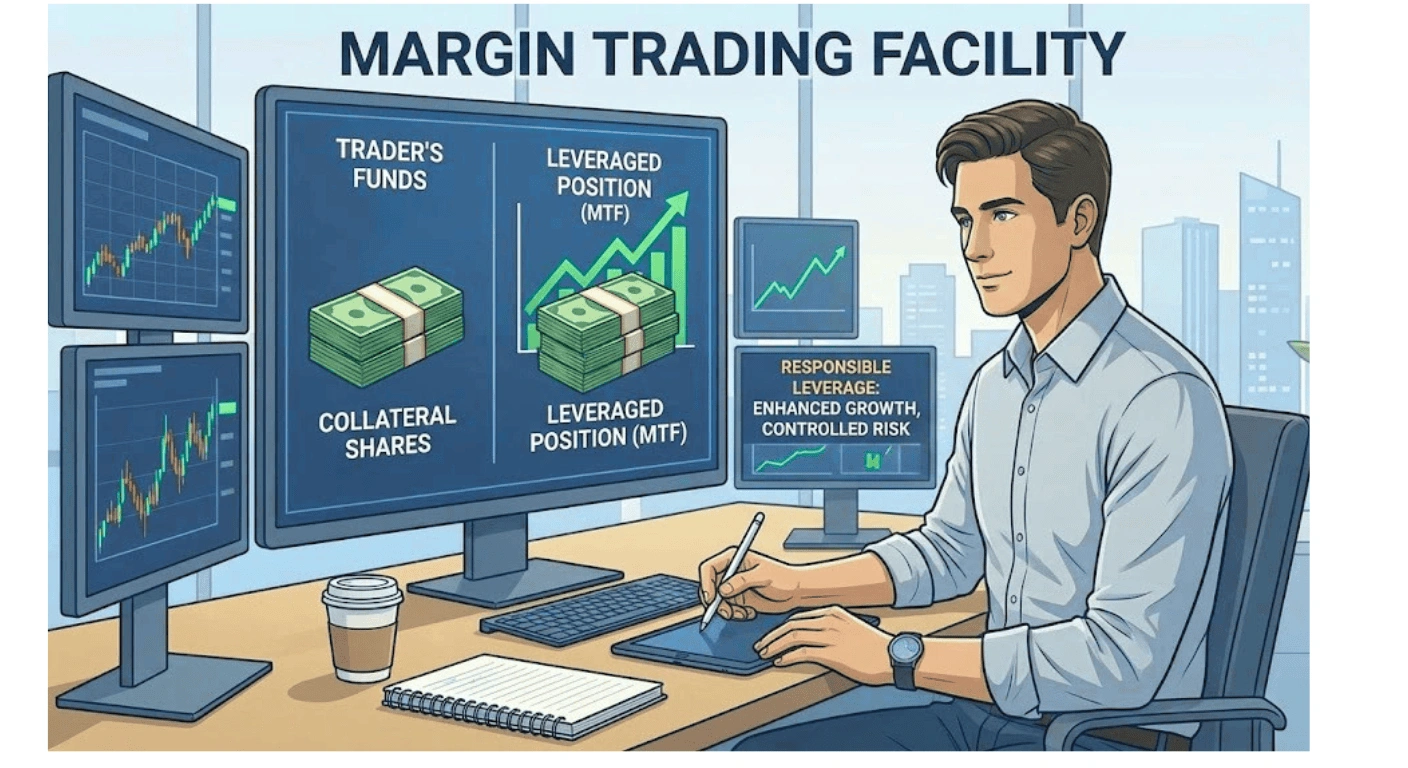
The first time I heard about MTF, I thought it was a complex term that seemed a bit scary. Many traders hear this term while using trading applications or platforms, but they never really grasp what it actually means. As time went by, I understood that MTF is not about making quick money or taking the easy way out.
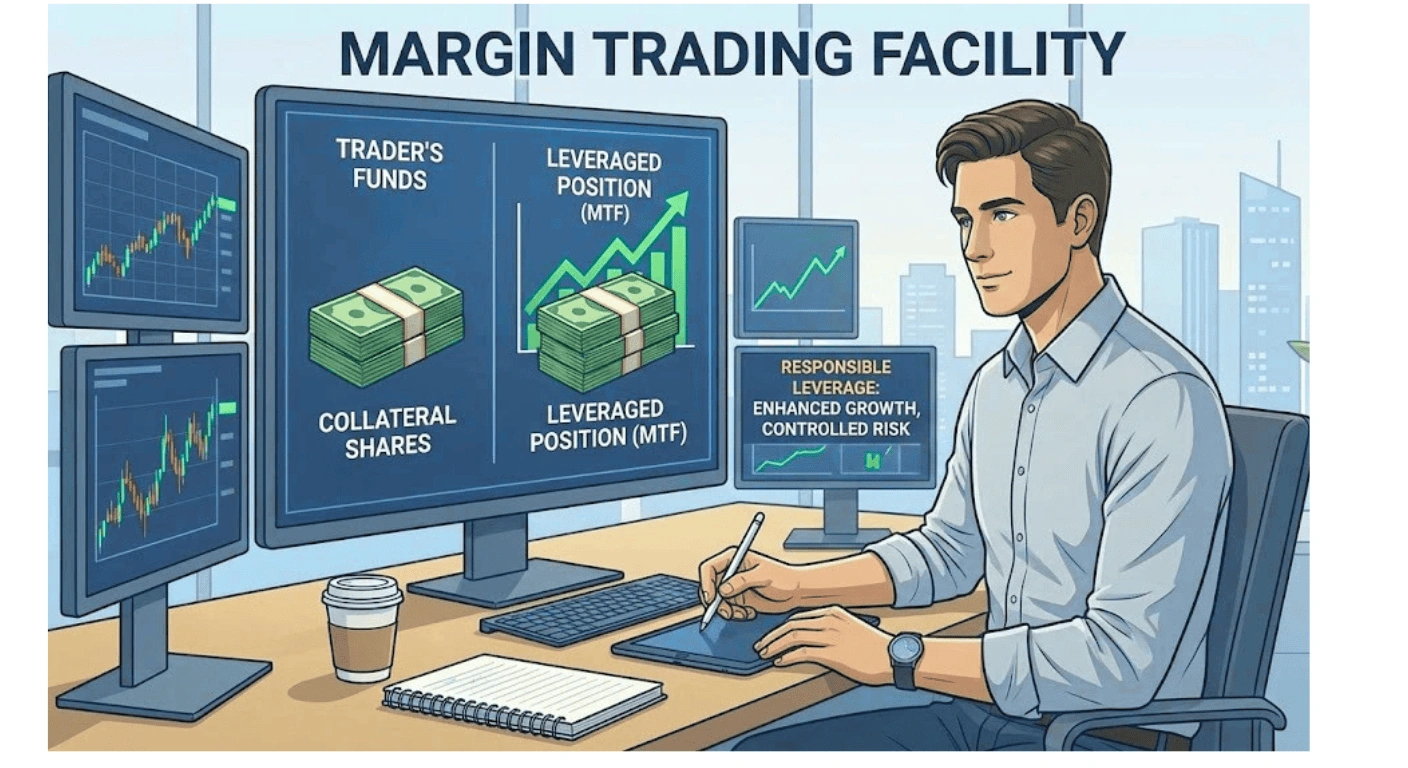
Learn how the margin trading facility works,risks, costs, and who should use it.
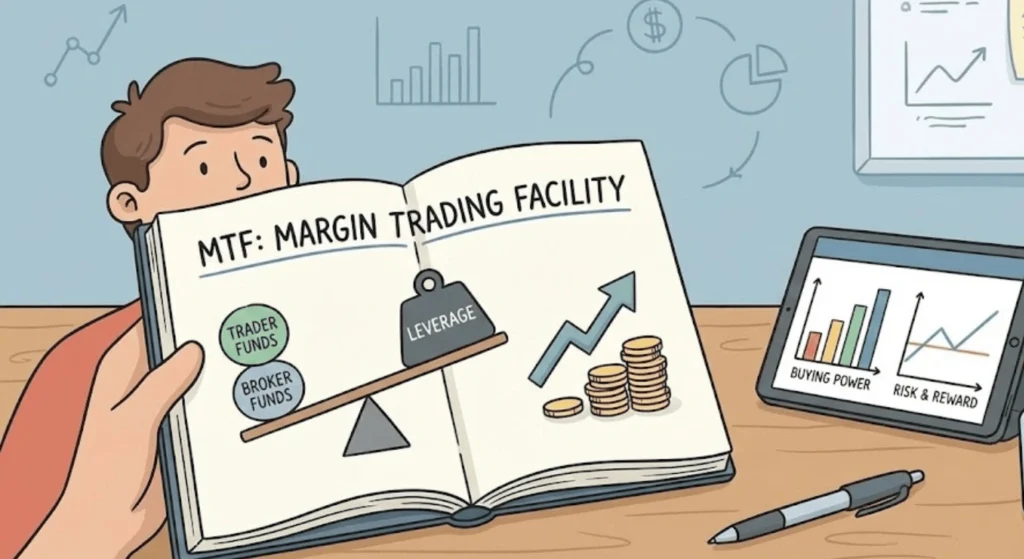
What Is MTF?
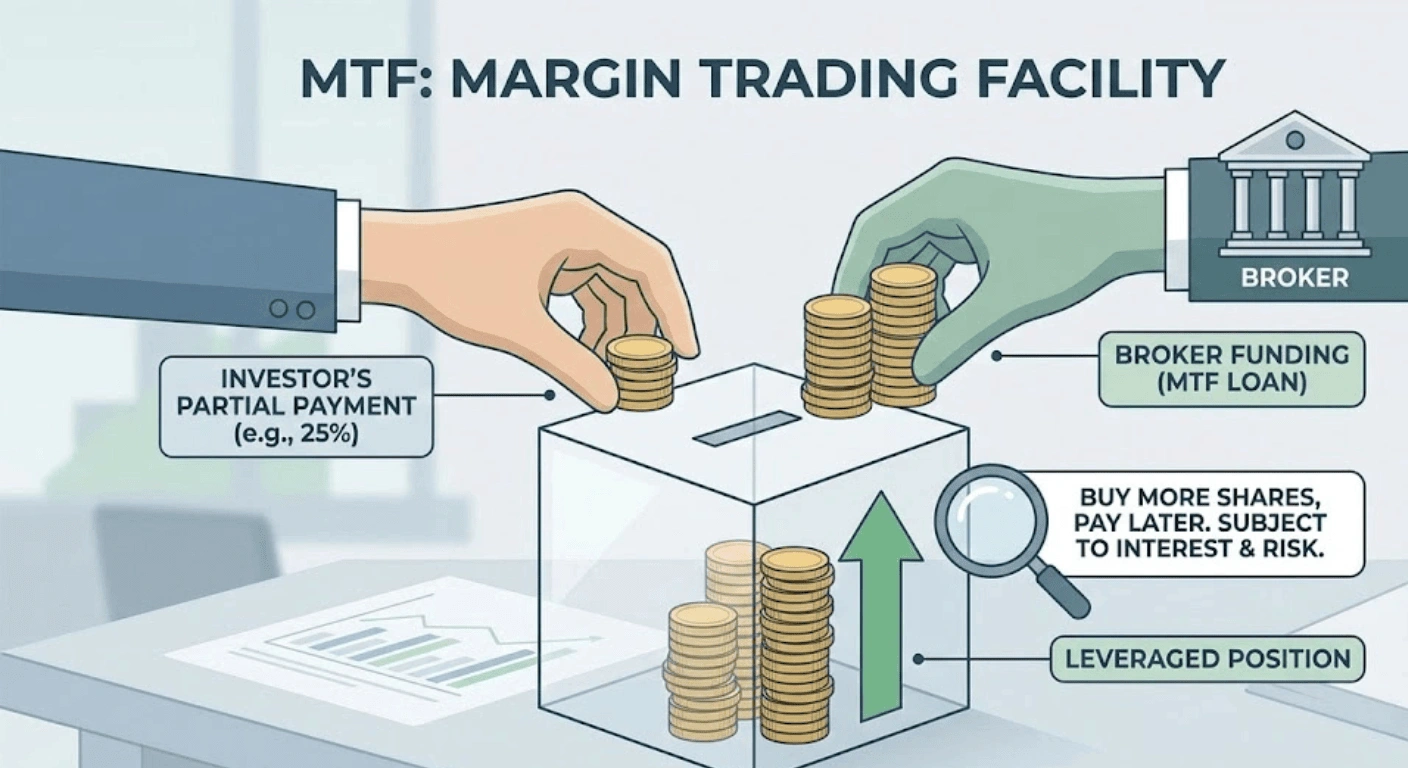
MTF is an abbreviation for Margin Trading Facility. It allows you to purchase stocks by paying for only a portion of the stock’s value, with the remaining amount being paid by your broker.
In simpler terms, it gives you the ability to have a larger market position using borrowed funds.
You will still own the stocks, but the broker will hold them as collateral until you pay back the borrowed amount.
Why MTF Exists in Trading
They exist to boost purchasing power.
Rather than waiting to buy the entire capital, traders utilize this to get involved in trading.
But with more power comes more responsibility.
How MTF Works Step by Step
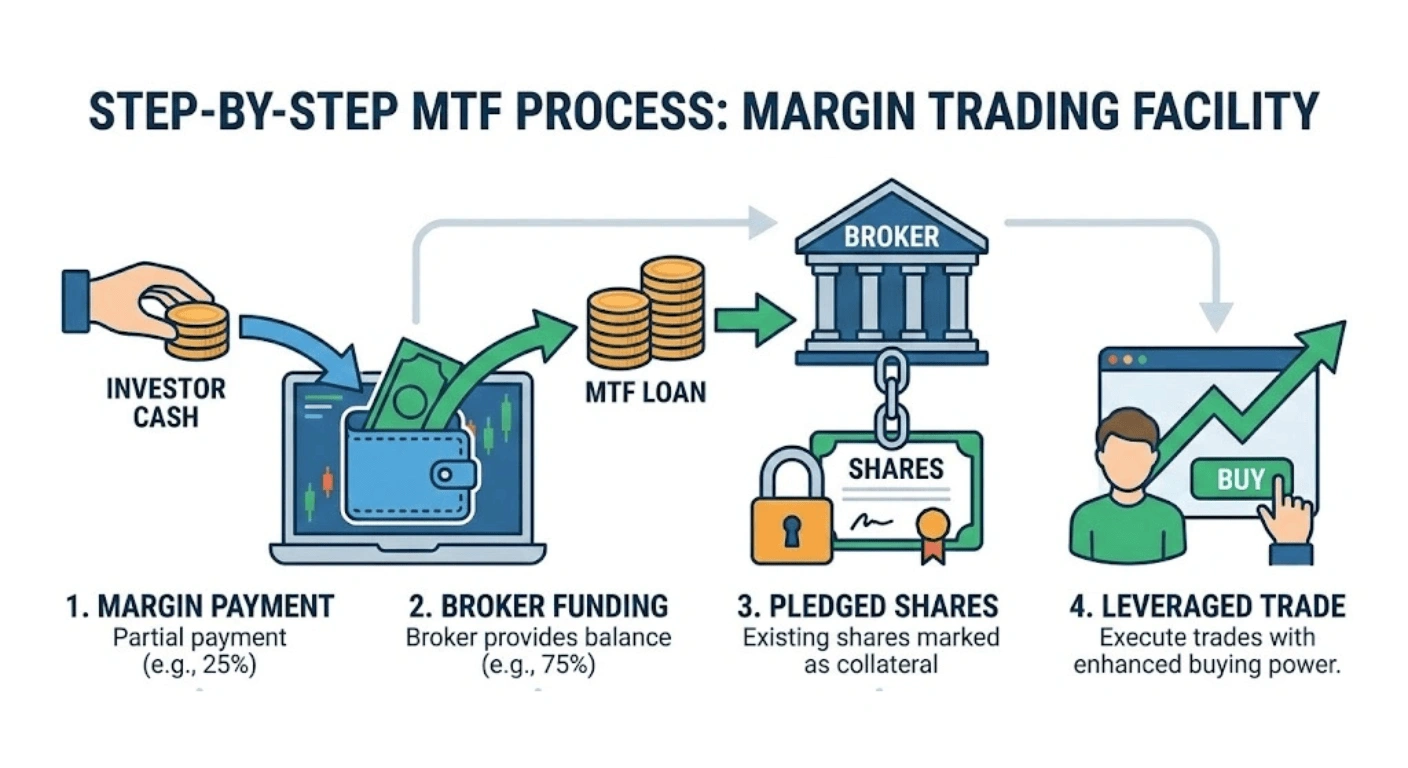
First, you select the shares that qualify for MTF.
Second, you pay a margin amount.
Third, the broker lends the remaining amount.
Fourth, the shares are held under pledge.
Lastly, you repay or close out the position.
This makes it easy to understand, but should not be taken lightly.
MTF vs Intraday Trading
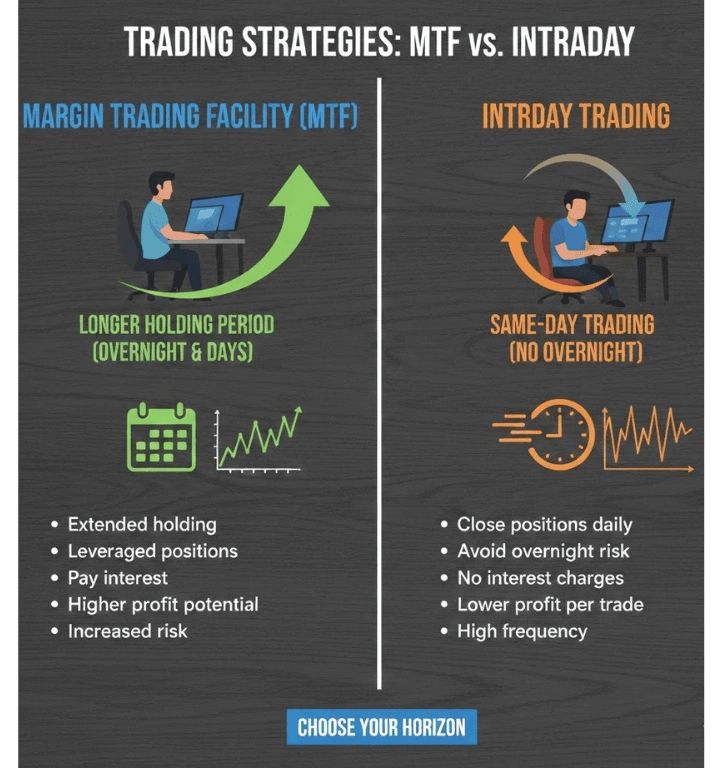
It enables the holding of positions for more than one day.
Intraday trading involves closing positions on the same day.
It involves interest cost.
Intraday involves higher short-term pressures.
MTF vs Delivery Trading
In delivery trading, you pay the full amount.
In MTF, you pay a partial amount.
Delivery does not involve interest cost.
It involves funding charges.
Eligible Stocks
Not all stocks are eligible for MTF.
Traders permit it only on eligible liquid stocks.
This minimizes high risk.
Cost Structure
It requires interest on the funded amount.
There are brokerage charges.
There are pledge charges.
Costs have a direct impact on profitability.
Risk Factors
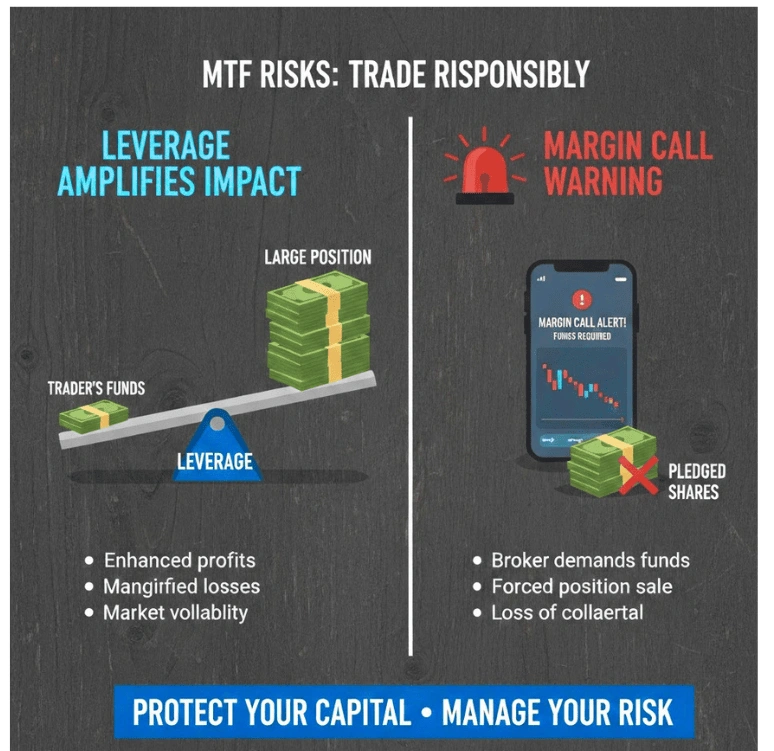
It multiplies losses.
Market volatility may cause margin calls.
Forced selling is possible.
MTF and Market Psychology
MTF assesses self-control.
Leverage heightens fear and greed.
Well-thought-out decisions become essential.
Who Should Use MTF?
It is best for experienced traders.
It is best for disciplined investors.
It is not best for beginners.
Who Should Avoid MTF?
Beginners.
Emotionally driven traders.
Those without risk management plans.
MTF for Short-Term Trades
It is commonly employed for short-term swing trading.
It enables efficient use of capital.
However, timing is of the essence.
MTF in Long-Term View
Employing MTF in the long term raises the cost of interest.
Long-term holding periods diminish benefits.
Strategic planning is required.
MTF vs Futures and Options
It requires ownership.
F&O requires a contract.
It is less complex.
F&O is highly leveraged.
Taxation on MTF Trades
Its taxation is based on delivery.
Capital gains tax applies.
Interest is a cost.
Knowledge of tax helps with clarity.
Common Mistakes in MTF
Over-leveraging.
Overlooking interest cost.
Holding on to losing trades.
No exit strategy.
Risk Management in MTF
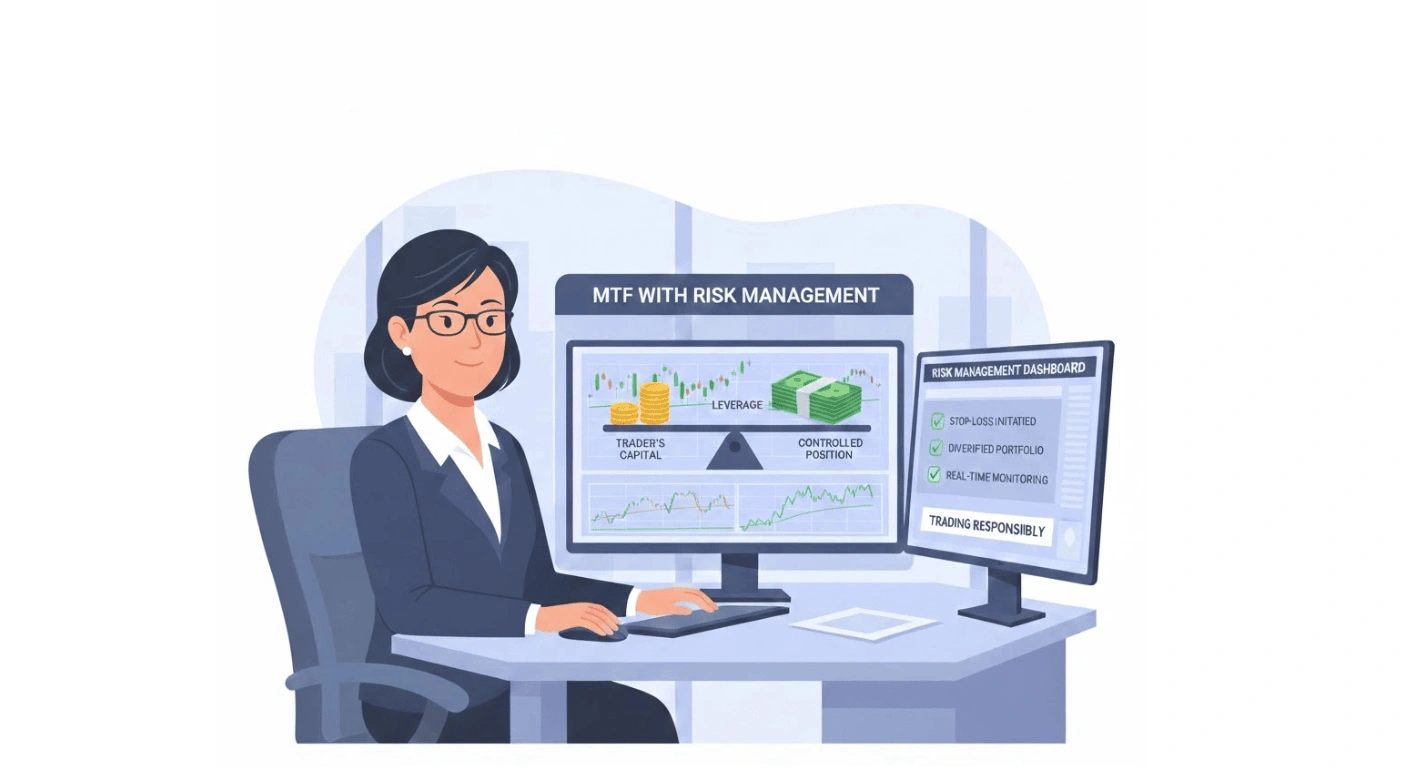
Stop loss is a must.
Position sizing is necessary.
Avoid overconfidence.
Risk management safeguards capital.
Advanced View on MTF
Advanced traders selectively use it.
They use it in conjunction with analysis.
They rely on probability.
It is a tool, not a habit.
Is MTF Profitable?
It can boost profits.
It can also boost losses.
Profitability requires discipline.
Final Verdict
It is neither entirely good nor bad.
It is very powerful if used properly.
It is very dangerous if used emotionally.
Knowledge of it makes you a responsible trader.
FAQs
1. Are MTF safe?
Risk exists. Discipline reduces impact.
2. Can beginners use MTF?
Not recommended. Learning should come first.
3. Is interest charged daily in MTF?
Yes, based on the funded amount.
4. Can MTF shares be held long term?
Possible, Cost increases over time.
5. Is MTF better than intraday?
Depends on strategy. Risk profile matters.