

When I first heard the word Bonds, I assumed they were only for rich people, governments, or large institutions. Over time, I realized that Bonds are one of the most important and misunderstood parts of the financial world. They quietly protect wealth, balance risk, and bring stability where markets feel uncertain. This guide is written to explain Bonds from the very basics to an advanced level.
This article is not advice. It is knowledge. The goal is to help you understand Bonds clearly so you can feel confident while learning about finance.

What are bonds explained simply. Learn types, risks, returns, and how bonds work for long-term investors.
What Are Bonds?
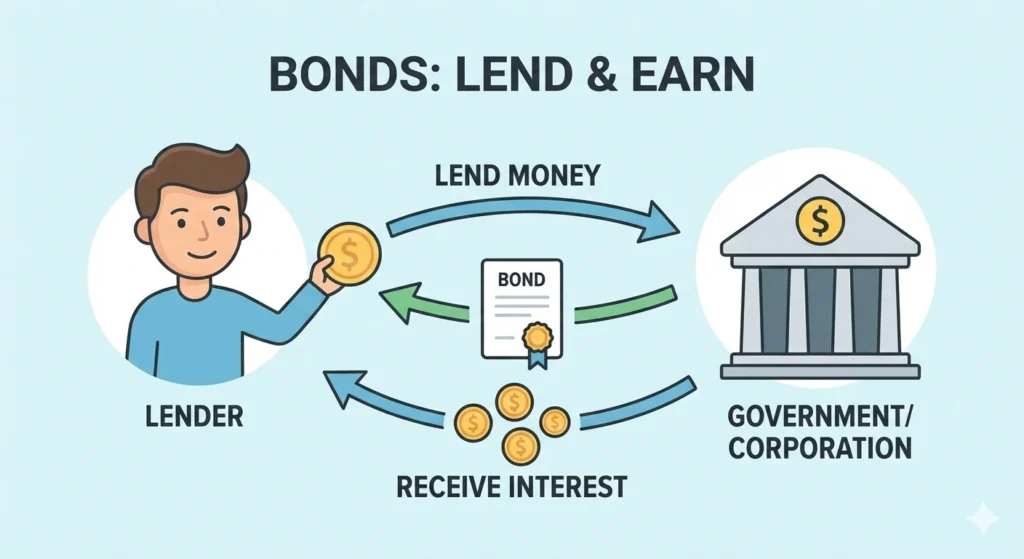
Bonds are a type of investment where you lend money to an issuer and receive regular interest in return. The issuer can be a government, a company, or a public institution.
In simple words, Bonds work like an IOU. You give money today, and the issuer promises to pay you interest and return your principal later.
Bonds are considered calmer than stocks because they focus more on income than growth.
Why Bonds Exists in Finance?
Both governments and companies, to carry on their functioning, always seek funding support in one way or another. But instead of taking loans only from financial institutions like banks, they enter into agreements with individuals to invest in
People invest in bonds because they seek stability in their returns and lower volatility. These characteristics of bonds create a balance in the world of finance.
How Bonds Work Step by Step
- First, an issuer must declare a “Bond.”
- Second, investors purchase the Bond by lending money.
- Third, interest accrues at regular intervals.
- Finally, the original capital is reimbursed at maturity.
- Its simplicity also means Bonds are easy to grasp, provided the basics are well understood.
Key Terms You Must Know About Bonds
Knowledge of the following terms will help you grasp the concept of “Understanding Bonds” more easily.
Face Value Is The Amount Originally Invested Coupon rate is the amount of interest paid on the Bond. The maturity date specifies when the Bond ends. Indicators of “yield” represent the result. These words recur frequently in the world of Bond investing.
Types of Bonds Explained Simply
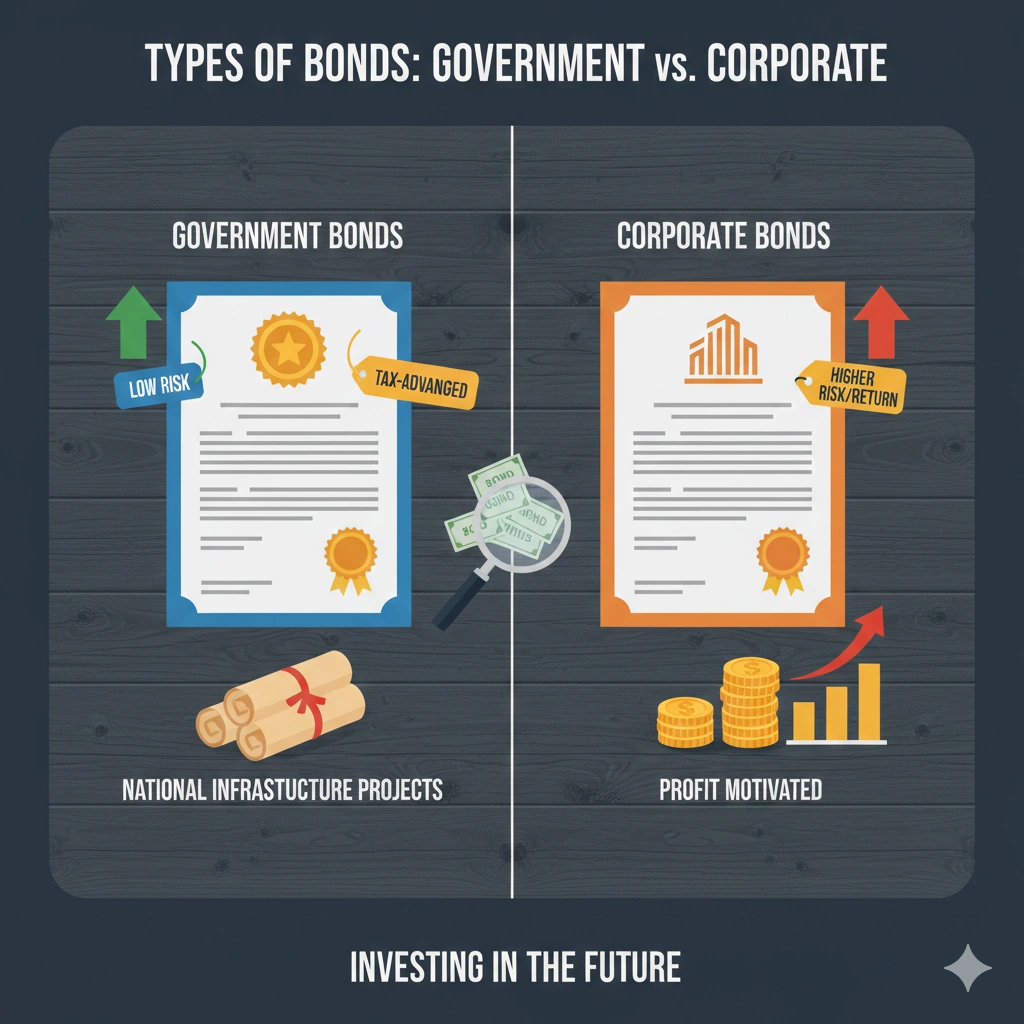
There are different kinds of Bonds, each utilized for a different purpose:
- Government Bonds are issued by the government. They are relatively safer.
- Corporate Bonds are issued by corporations, providing higher yields but greater risk.
- Municipal Bonds are issued by Local Authorities.
- Each type of Bond is best suited to a different kind of Investor mentality.
Government Bonds in India
In India, government Bonds are used to fund public expenditure, which is usually stable due to support from the government.
These Bonds appeal to many conservative investors as safe long-term investments and sources of stable income.
Corporate Bonds and Their Role
Corporate Bonds offer higher interest compared to government Bonds. However, the risk depends on the company’s financial health.
Strong companies usually offer lower yields, while weaker companies offer higher yields.
Risk and return always move together in Bonds.
Bonds vs FD
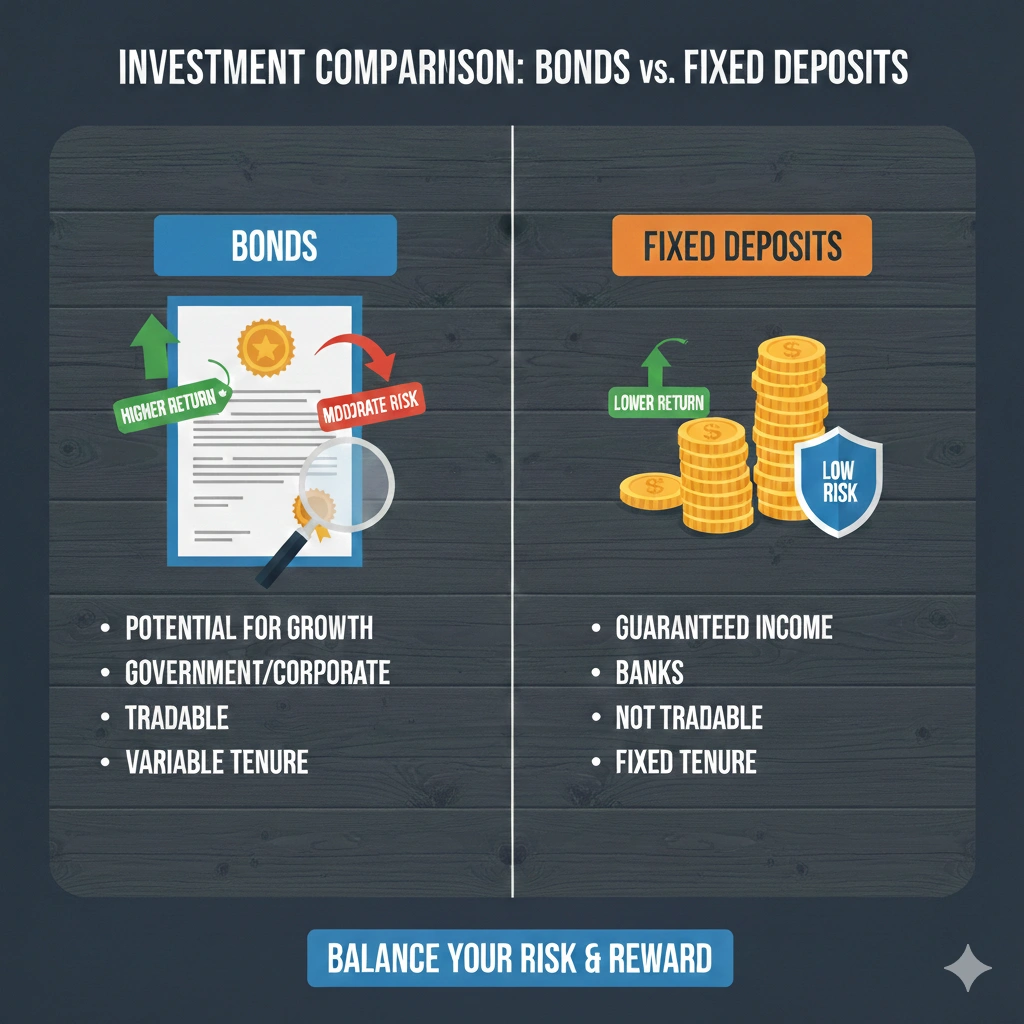
Many people get confused between Bonds and Fixed Deposits.
“Fixed Deposits provide guaranteed returns.”
The bonds provide a stable income, coupled with a price that is tied
Bonds can be sold in the market before their maturity date, which is not the case with
Bonds vs Shares
In Shares Market , Shares are a representation of ownership
Bonds are representative of lending.
The returns on shares vary depending on the performance of companies.
Returns on bond investments depend on interest payments.
Stability is the main focus of bonds, whereas the main focus of shares is to bring higher.
Risk Factors in Bonds
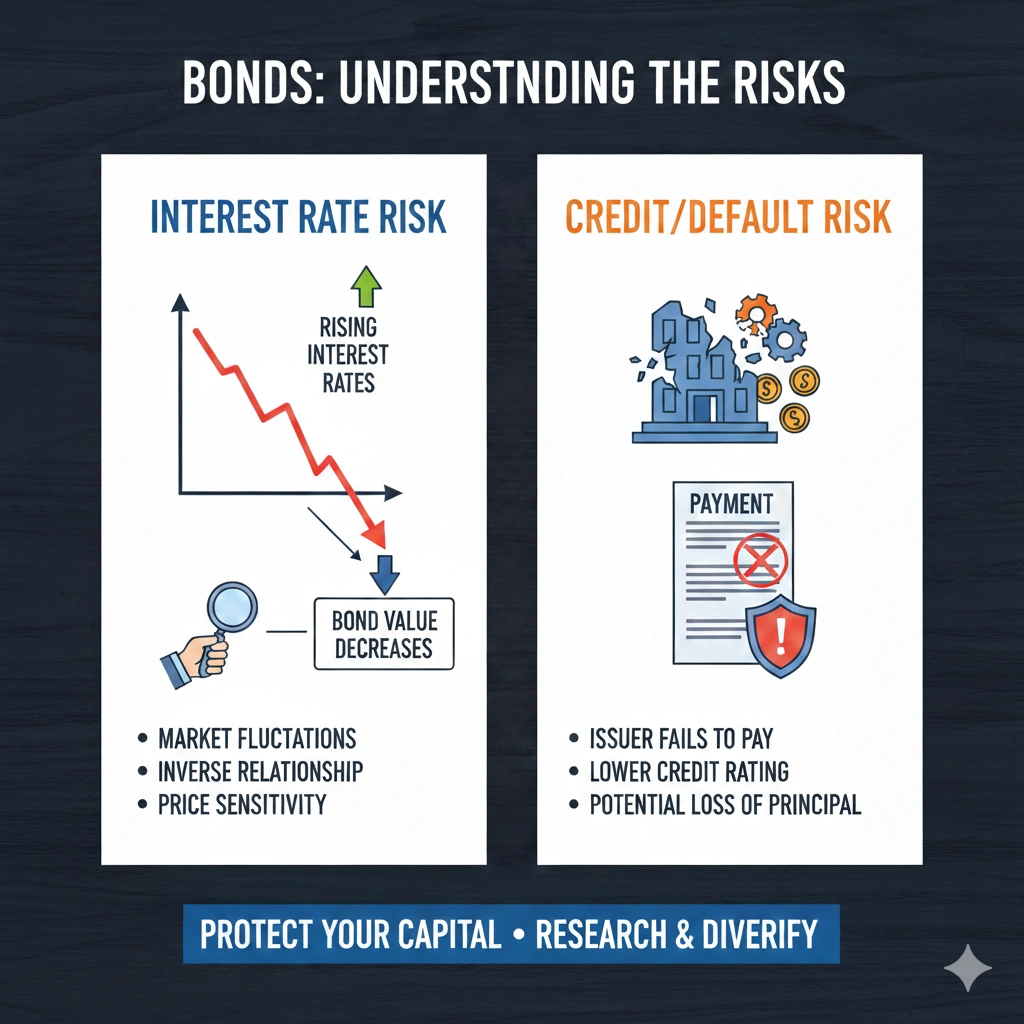
bonds are not risk-free
Change in interest rates influences Bonds Price.
There would also be credit risk in the event that the issuer defaults.
Inflation can erode the real return.
Knowledge of the risks allows you to invest prudently.
Price of Bond decreases if interest rates increase.
Learn more about Risk management.
How Interest rate impacts Bonds
- When interest rates fall, bond prices rise.”
- This relationship is important to advanced bond investors.
Why Bonds Are Important in a Portfolio
“Bonds bring balance.“
- They reduce volatility.
- They offer stable income.
- They protect capital in an uncertain market.
A well-built portfolio will normally consist of Bonds.
Bonds and Market Psychology
Bonds appeal to afraid those investors who buys in Greed.
The psychological factors involved in this process will assist in reading market fluctuations.
Bonds for Beginners
To the uninitiated investor, Bonds are for learning purposes. They Teach:
- Patience
- Consistency
- Discipline
Bonds help the beginner understand how money works calmly.
Advanced View on Bonds
Advanced investors utilize Bonds to strategize.
- They adjust the duration.
- They manage the yield curves.
- They balance equity exposure.
Bonds in Long-Term Wealth Planning
At this level, Bonds become powerful tools.
Bonds are not for thrill.
They’re for stability.
Common Mistakes People Make With Bonds
They aid in the maintenance of wealth.
They support long-term objectives.
Overlooking credit ratings.
Blindly chasing high yield.
Should You Invest in Bonds?
Ignoring inflation.
Not understanding maturity.
This avoids the mistakes and improves the results.

Conclusion
Well, that depends on your goals.
If you’re looking for growth, Bonds aren’t sufficient on their own.
When it comes to balance, you need Bonds.
Clarity trumps returns. Bonds may not be the most exciting investments on the planet, but they are potent ones. They quietly protect wealth. They bring order to disorder. Understanding Bonds will make you a wiser investor.
FAQ‘S
Are Bonds safer than stocks?
- Generally lower volatility
- Depends upon the quality of issuer
Do bonds promise returns?
- Interest is promised
- Market price may go up or down.
Can bonds be sold prior to maturity?
- Yes, via secondary markets
- Price will follow demand.
Are bonds good for beginners?
- Yes, for learning stability.
- Useful to balance risks
How Much of a Portfolio Should be in Bonds?
- It depends on age and risk tolerance.
- Everything must be in moderation