

In 2026, managing wealth i.e. To manage wealth will mean more than just saving or making big money.I have learned that the most effective way to manage your wealth is to be patient, clear, and calm and have a growth-oriented mindset. In today’s world, lifestyle, emotional control, and future planning are all interlinked with your wealth.
The purpose of this guide is to teach you how to manage your finances effectively by learning from scratch and then progressing to advanced levels. This guide is in no way a shortcut. The purpose is to build discipline, confidence, and self-respect in your finances.

Manage wealth effectively in 2026 with simple steps and long-term planning.
What Does It Mean to Manage Wealth?
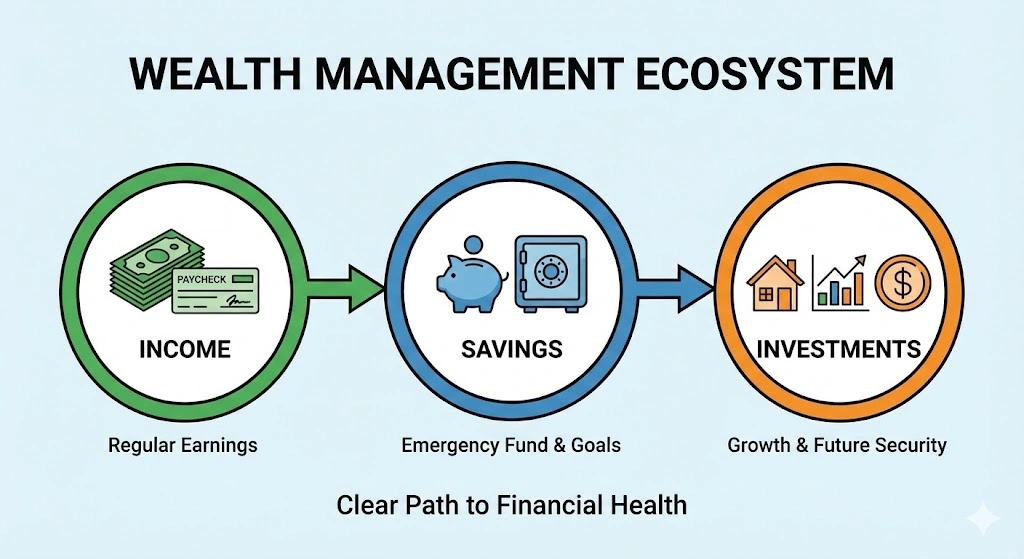
To manage wealth means Wealth management – to take control of your income, savings, investments, risks, and goals in a balanced way. It is not only about how much money you earn. It is about how you use it, protect it, and grow it over time.
When I began learning to manage wealth, I realized that wealth management begins in the mind before it begins in numbers.
Why Wealth Management Matters More in 2026
In 2026, financial decisions are more complicated.
Inflation impacts purchasing power.
Opportunities are all around.
Risks are also greater.
Because of this, the skill of managing wealth in a calm manner is more important than ever.
The Foundation of Wealth Management
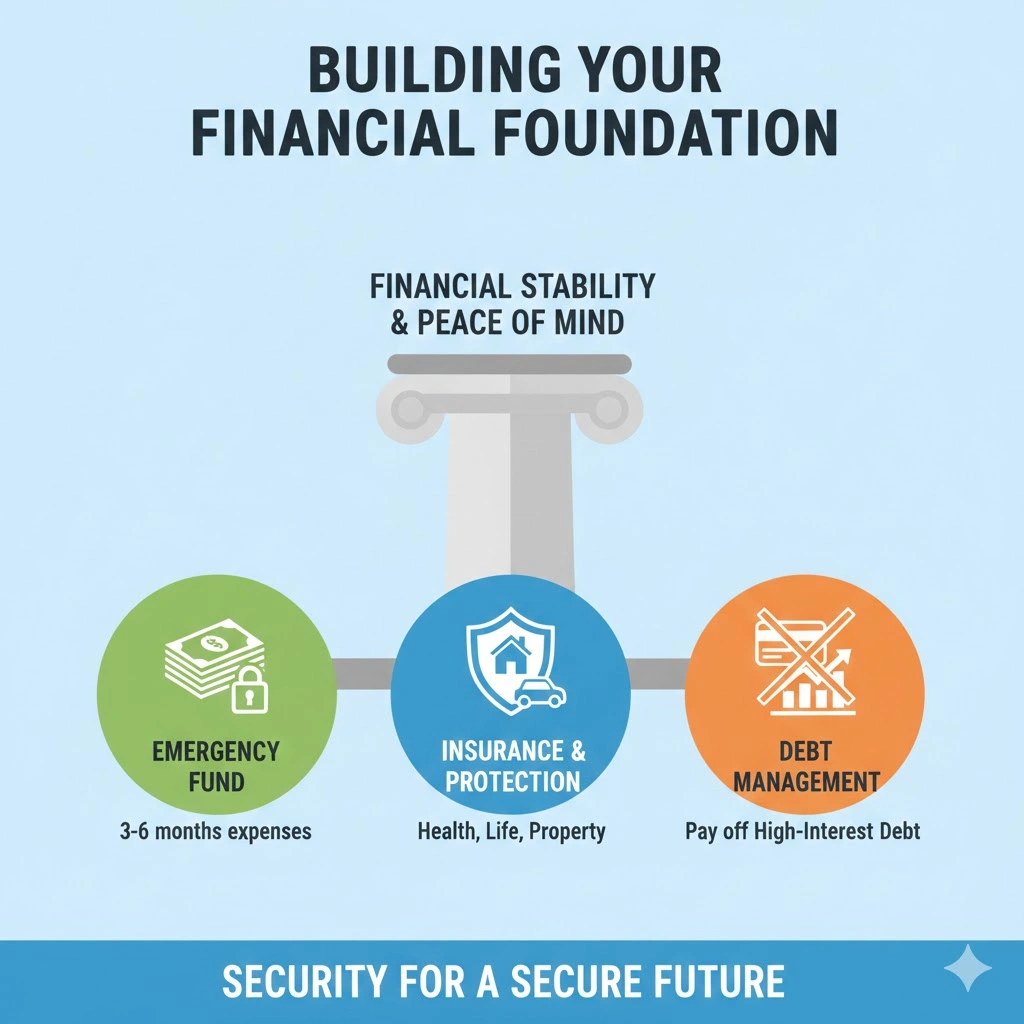
Before investing or planning, a solid foundation is necessary.
Income awareness.
Expense control.
Emergency savings.
Basic insurance.
Without a foundation, wealth is precarious.
Step One: Know Your Cash Flow
To manage wealth, you must understand where your money comes from and where it goes.
Record income.
Record expenses.
Find leaks.
Understanding cash flow gives you confidence.
Step Two: Build an Emergency Fund
An emergency fund secures peace of mind.
It stops panic decisions.
It stops forced sales.
Three to six months of expenses is best.
Step Three: Control Lifestyle Inflation
As income increases, expenses increase.
This is disastrous for long-term wealth.
Lifestyle growth management is a wealth-building skill.
Step Four: Understand Risk Before Return
Every investment has risk.
Wealth is built when risk is understood, not ignored.
This approach distinguishes investors from gamblers.
That’s Why it’s Important to learn about Risk Management the right way.
Step Five: Asset Allocation Explained
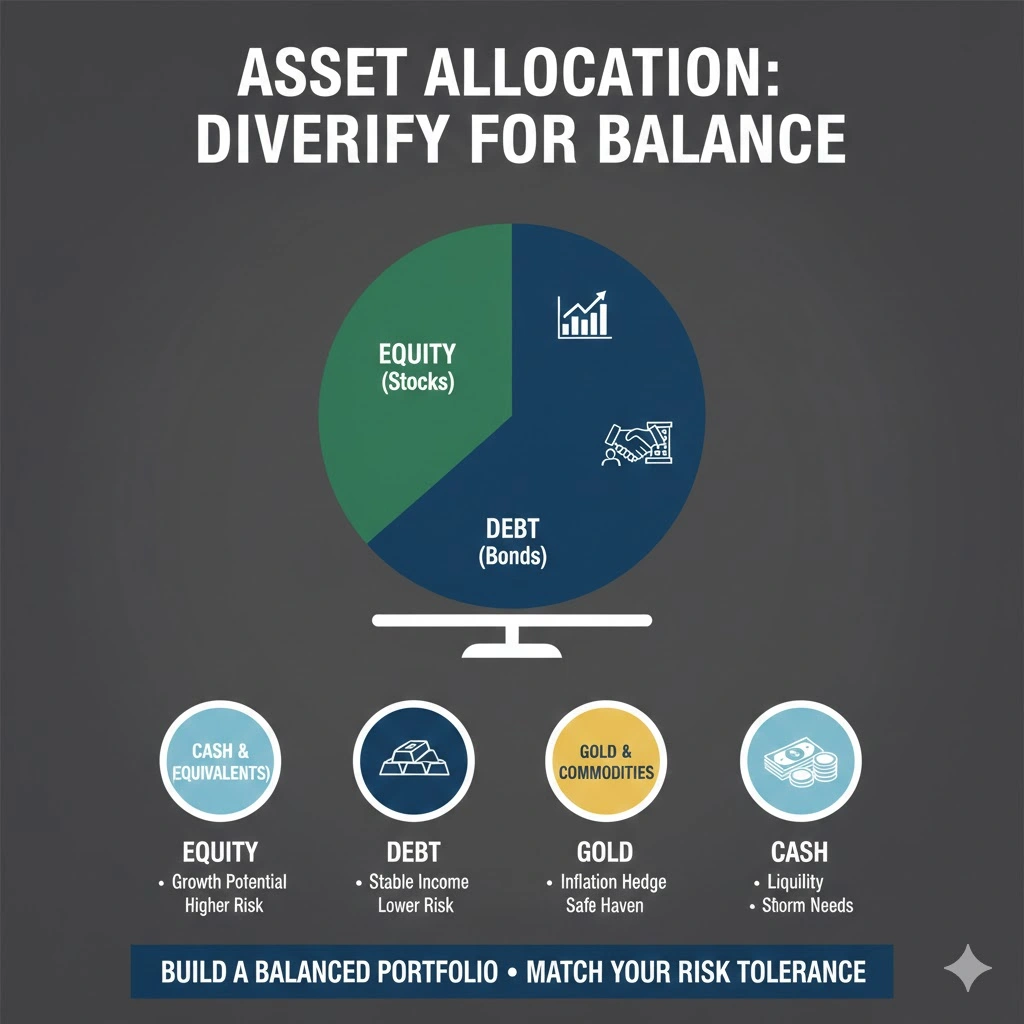
Asset allocation is the core of wealth management.
Funds are allocated across different assets like:
ETFs
Equity.
Debt.
Gold.
Cash.
This diversification ensures stable growth.
Managing Wealth Through Investing
Investing is not market timing.
It is making informed investment decisions.
Long-term planning is less stressful.
Equity for Wealth Growth
Equity helps create long-term wealth.
It outperforms inflation.
It is kind to the patient.
However, it demands mental toughness.
Debt Instruments for Stability
Debt helps diversify investments.
It safeguards wealth.
It stabilizes market fluctuations.
A sound wealth strategy values debt.
Gold and Alternatives in 2026
Gold helps hedge risks.
Alternatives help diversify investments.
They minimize reliance on a single investment.
The Role of SIPs in Wealth Management
Systematic investing Plan instills discipline.
It overcomes timing based on emotions.
It helps in consistency.
Tax Planning Is Wealth Protection
Taxes lower actual returns.
Effective tax planning helps in wealth protection.
Efficiency in legality is important.
Insurance as a Wealth Shield
Insurance does not increase wealth.
It helps in protecting wealth.
Health and life insurance are necessary.
Debt Management and Wealth Health
High-interest debt reduces wealth.
Debt reduction enhances financial freedom.
Discipline in debt management is discipline in wealth management.
Psychology of Wealth Management

Fear and greed influence decisions.
Emotional control is the key to success.
Unemotional decisions compound better.
Common Wealth Management Mistakes
Following trends.
Overlooking risks.
Overconfidence.
Lack of review.
Awareness can prevent errors.
How Often Should You Review Wealth?
Review your wealth once a month.
Make changes with life changes.
No need to tinker with it all the time.
Wealth Management for Different Life Stages
Young working individuals emphasize growth.
Families emphasize balance.
Seniors emphasize wealth preservation.
Context is important.
Advanced Wealth Thinking in 2026

Wealth is freedom, not fancy.
Simplicity breeds clarity.
Purpose provides direction.
Building Wealth Without Stress
Stress-free wealth builds slowly.
Consistency is better than intensity.
Patience is better than prediction.
Final Verdict on Managing Wealth
Wealth management in 2026 means living consciously with money.
It is all about balance.
It is all about awareness.
It is all about respecting your future self.
Frequently Asked Questions
1. What is the first step in managing wealth?
Track cash flow & Build emergency fund.
2. How much risk is optimal?
Depends on age & goals.
3. Is wealth management only for the wealthy?
No, It is for everyone.
4. Should I invest or save more?
Both, but Balance matters.
5. How often should wealth strategies be updated?
When life changes , Not frequently.