
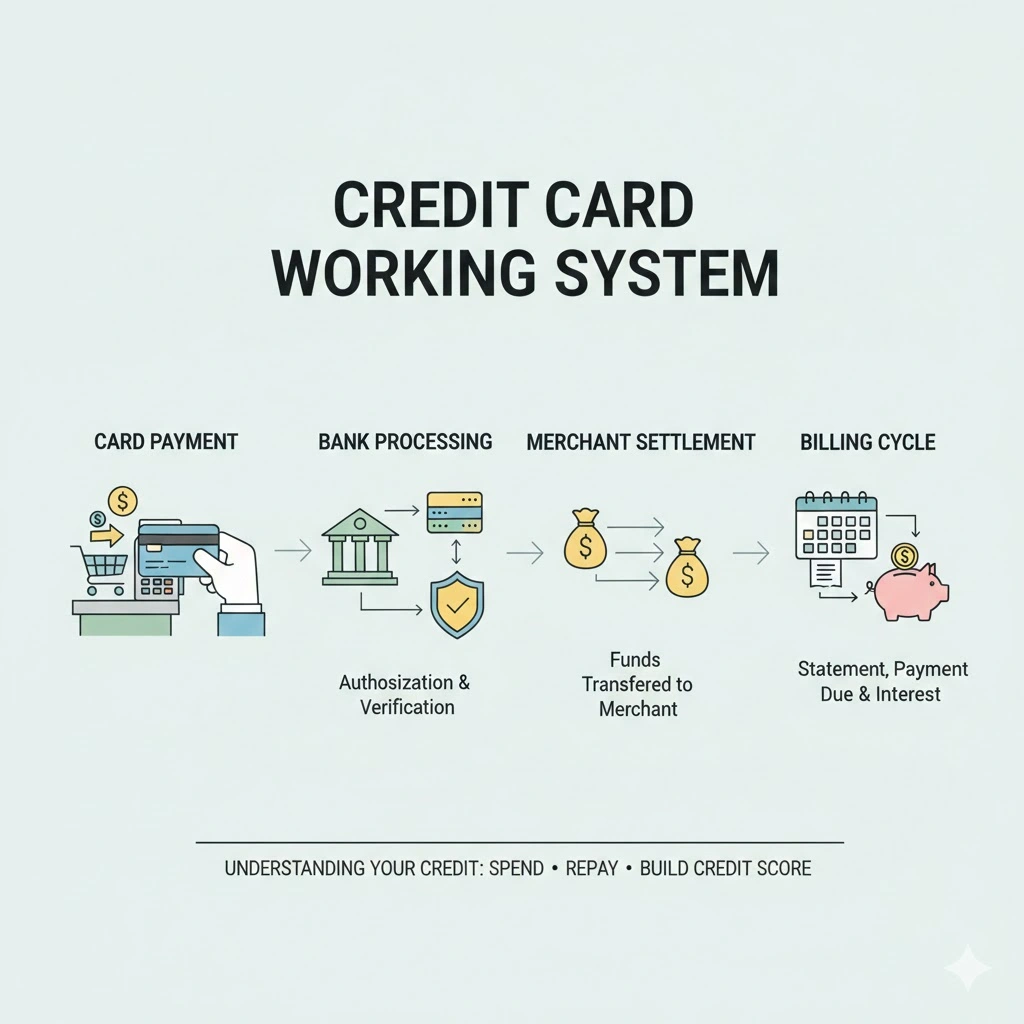
When I first used my credit card, I thought to myself, "Hey, this is like having money for nothing." I tapped the screen, paid, and left. My wallet was not out of cash. My bank balance was not debited." On the other hand, as time went by, I realized that having a credit card was not having money for nothing.
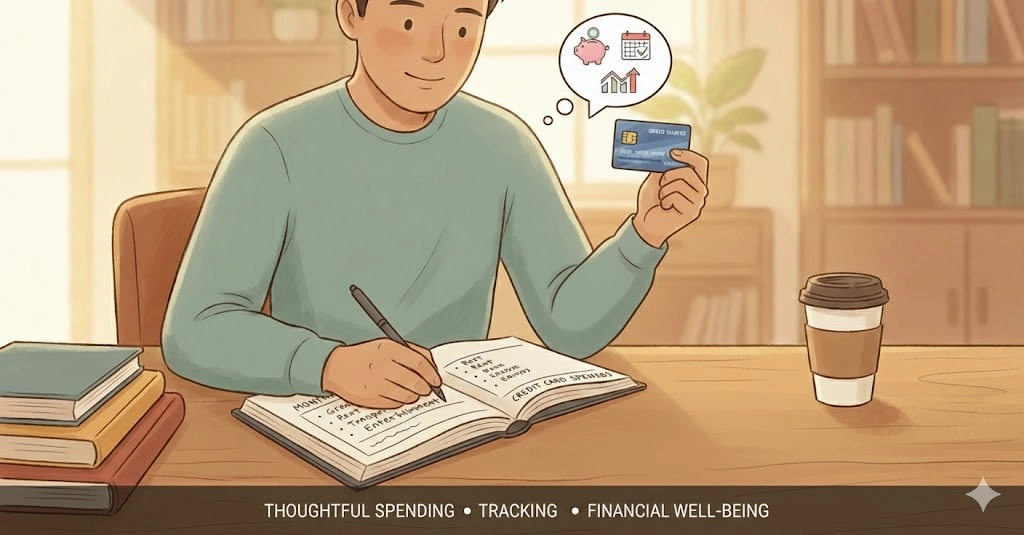
Instead, a credit card is like a lending system based on trust, discipline, and time.
This is a detailed guide on how a credit card works, ranging from ground level to a superior knowledge level. We will discuss the whole system, examples, benefits, risks, and how to use it wisely. Learn how a credit card works including the whole concept, benefits, risks, and proper usage.
You Must understand How it works and then you have to develop financial discipline then use it.
What Is a Credit Card?
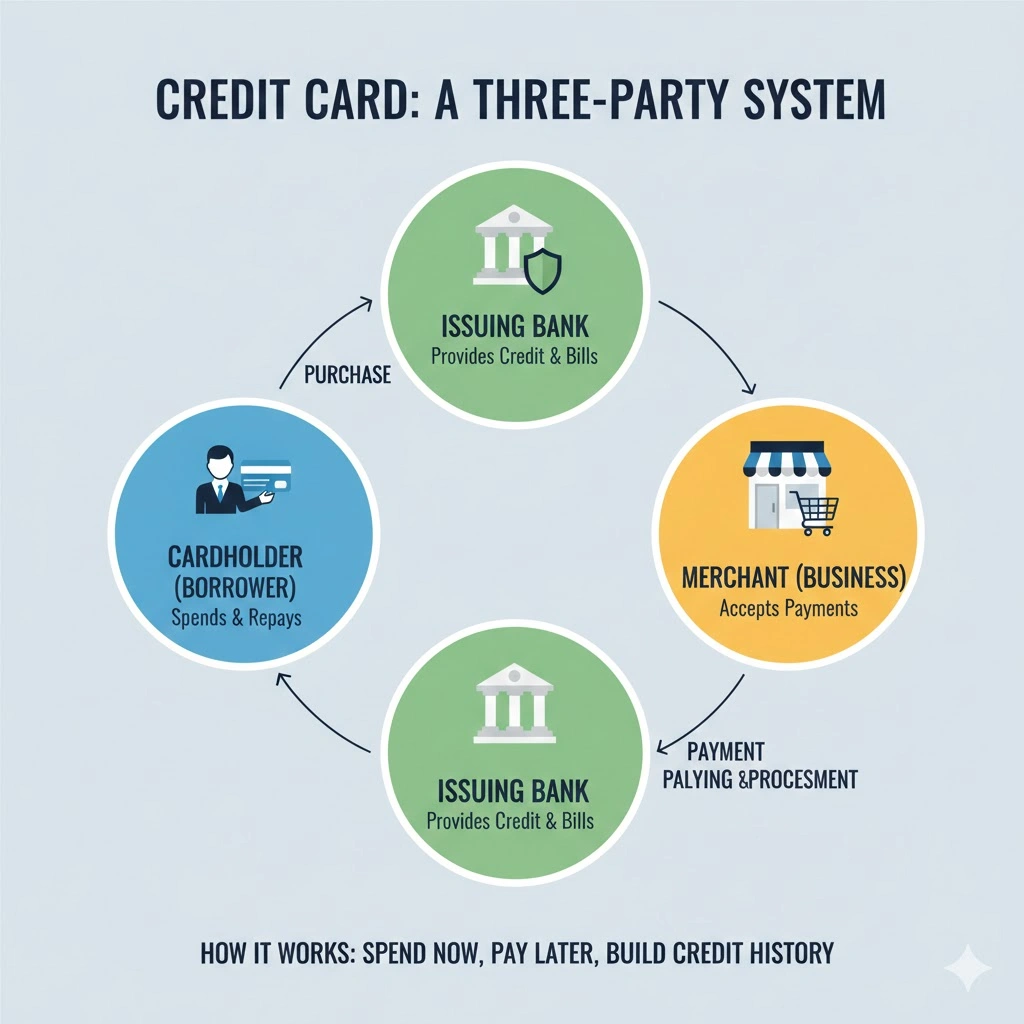
A Credit Card is a financial device that any bank or financial institution gives you, enabling you to borrow funds for any kind of purchase. In this case, you do not pay immediately using your bank funds; instead, the bank acquires the funds for you.
In simple words, credit card is a medium to borrow money on credit, promising to pay later on within a specified time period.
Why Credit Cards Exist
Credit cards exist in order to make payments more easier, quicker, and traceable.
- They allow cashless transactions.
- gives short-term credit.
- helps in building financial history.
- It require responsibility in finances , however.
How the Credit Card System Works Step by Step
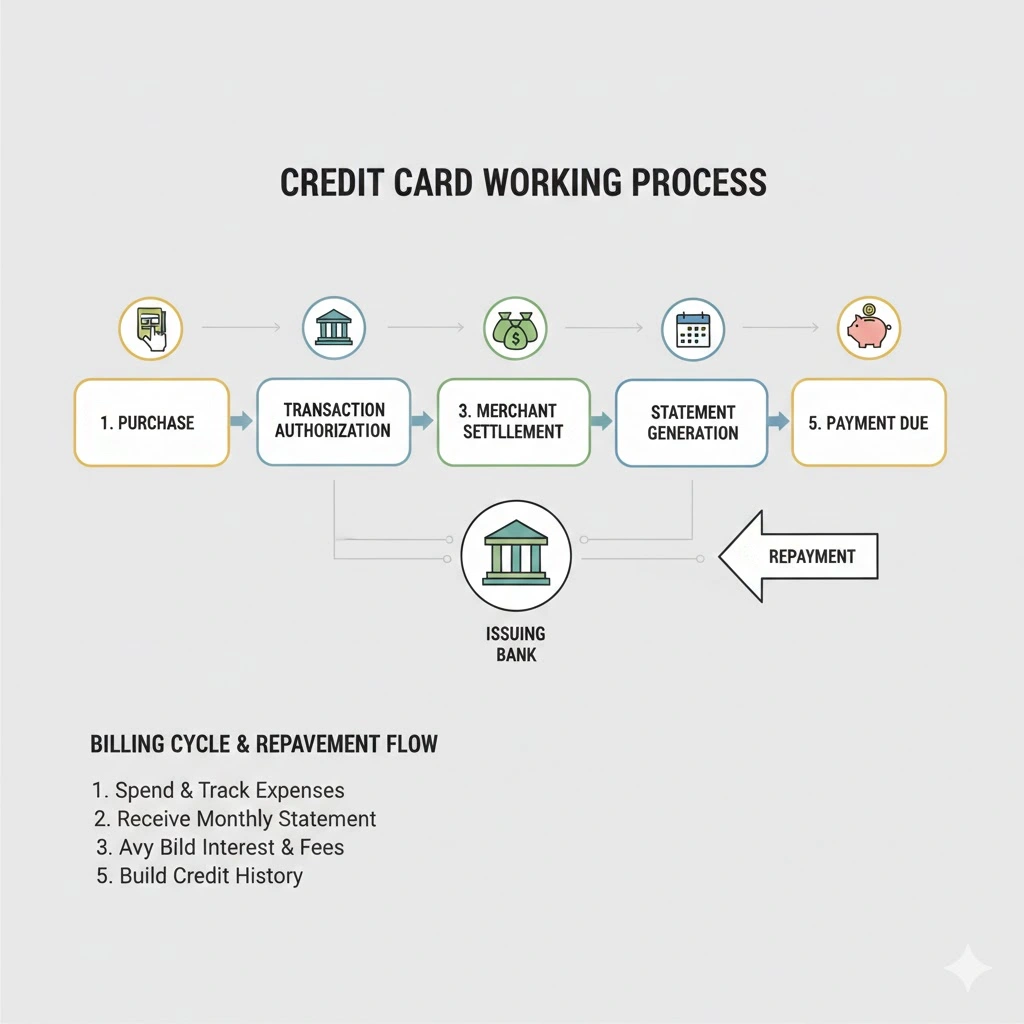
Understanding the system makes everything clearer.
- First comes an approval of your credit card from the bank.
- Second You are then accorded a credit limit.
- Third, you make purchases on the card.
- Fourth, the bank pays the merchant.
- Fifth, you pay the bank back later.
This is a monthly circle.
Real World Example of Credit Card Usage
Assume that you purchased a phone worth 20,000 using a credit card.
- The bank pays the store immediately.
- You get a bill after the billing cycle.
- You return the amount before the due date.
- If paid on time, no interest is charged.
The mechanics can be heard in other contexts.
What Is Credit Limit?
The credit limit refers to the maximum amount you can spend on that card.
- It depends on income.
- It would depend upon the credit history.
- Using less than the limit is healthy.
Billing Cycle Explained
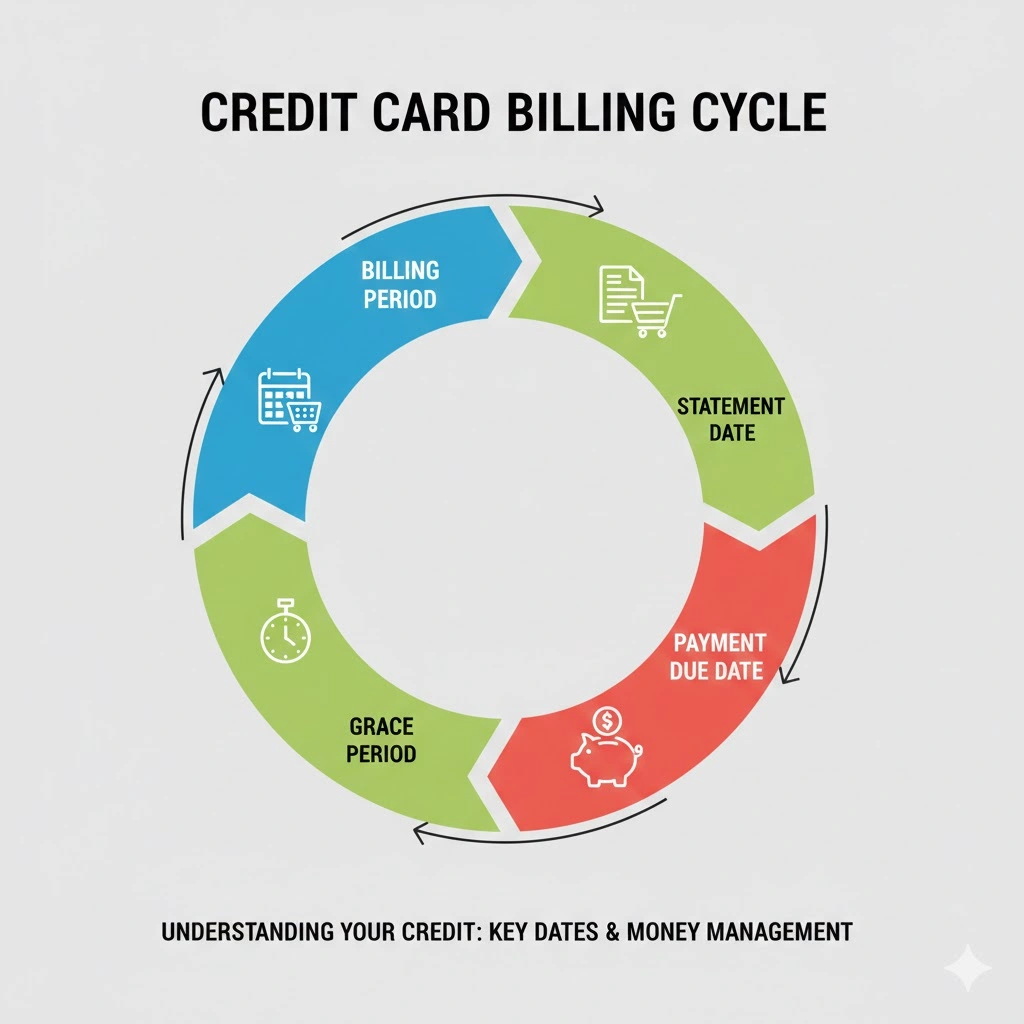
The billing cycle is the time period in which your transactions are recorded.
- Usually 30 days.
- A statement is produced after the cycle is finished.
Understanding this timing is key.
Due Date and Grace Period
Due Date: This is the time when the payment is needed.
The Grace Period refers to the interest-free period.
Paying within this period will prevent incurring any interest.
Discipline helps save money.
Minimum Due vs Full Payment
Minimum due is a small part of a bill.
If one is only paying the bare minimum, then
Full payment eliminates interest.
Smart users always pay in full.
Interest Charges Explained
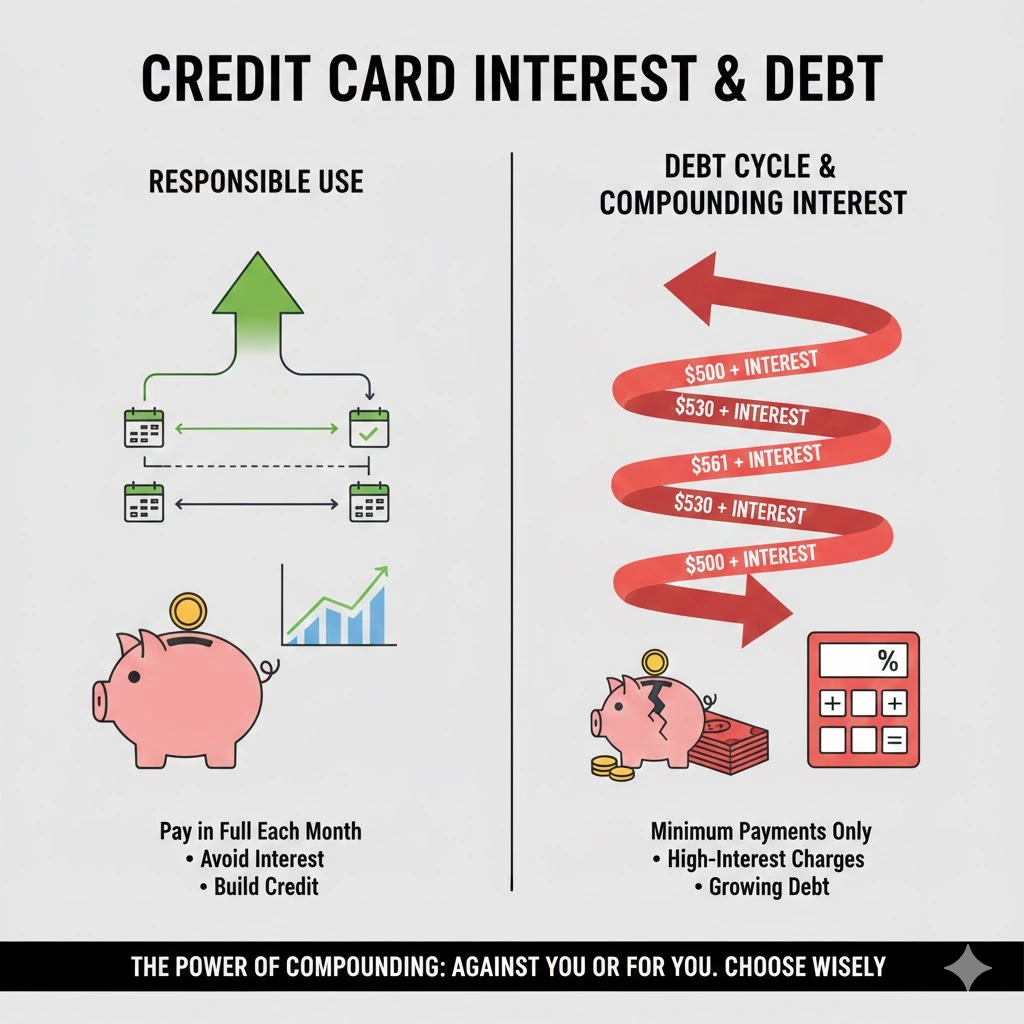
Interest is incurred when there is no payment.
High rates, compared to loans:
Compound interest is applied daily.
This is when the problems start.
That’s why it’s Important to learn Risk Management
Credit Card Fees You Should Know
It depends Every Credit Card has different system on how to pay fees ,There are:
- Annual Fees.
- Late payment charges.
- Cash withdrawal fees.
- Overlimit charges.
Knowing the fees helps to avoid surprises.
CIBIL Score and Credit Card
A credit card influences your CIBIL score.
- Paying on time can increase the score
- Missed payments hurt the score.
CIBIL score influences future loans availability.
Pros of Using a Credit Card
- Convenience.
- Reward Points
- Cash Back Offers
- Emergency support.
- CIBIL score Building
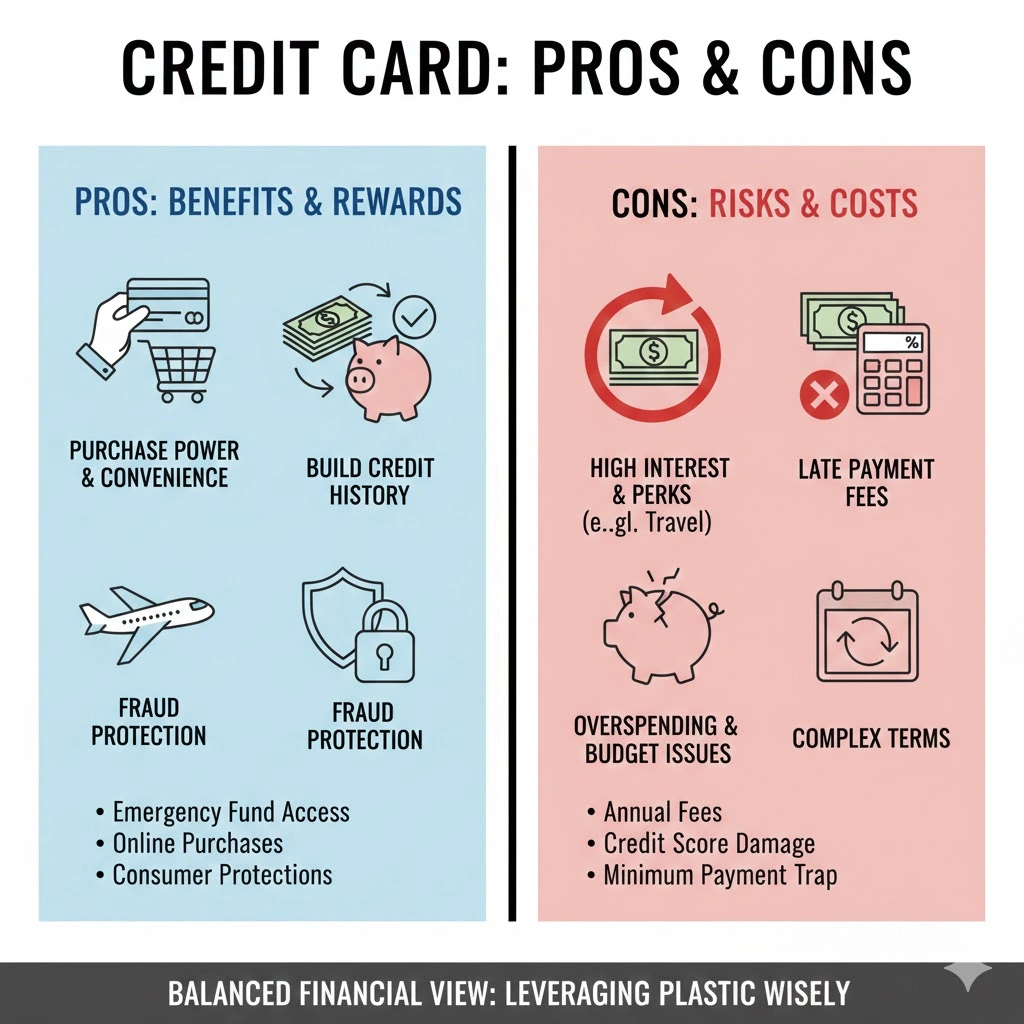
Cons of Using a Credit Card
- Risk of overspending
- Debt trap possibility.
- Psychological dependency.
- High Interest rates
Credit Card vs Debit Card
Credit card utilizes borrowed money.
Debit cards use your own money.
They have the advantages of offering flexibility.
One benefit of debit cards is their simplicity.
EMIs and Credit Cards
Large Purchases Can Be made Under EMI.
EMI reduces burden.
Interest may apply.
Terms and conditions are must to be understood before purchasing.
Advanced Credit Card Usage
Smart users also align billing cycles.
They maximize rewards.
They avoid unnecessary EMIs.
Strategy does matter.
Common Credit Card Mistakes
- Paying minimum due.
- Missing due dates.
- Using full limit.
- Ignoring statements.
“Awareness prevents mistakes.“
Is Credit Card Good or Bad?
A credit card does not carry any specific meaning.
“Usage determines the outcome.”
“Carelessness makes it dangerous.”
Financial Discipline makes it powerful.
Who Should Use a Credit Card?
- People possessing stable income.
- People with financial discipline.
- Persons who monitor expenses.
Who Should Avoid Credit Cards?
- Impulse spenders
- People dealing with debt.
- People who avoid tracking finances.
Credit Card and Financial Discipline
A credit card shows your habits.
- It reflects discipline.
- It teaches the concept of delayed gratification
That’s why it’s important to manage wealth the right way.
Final Verdict
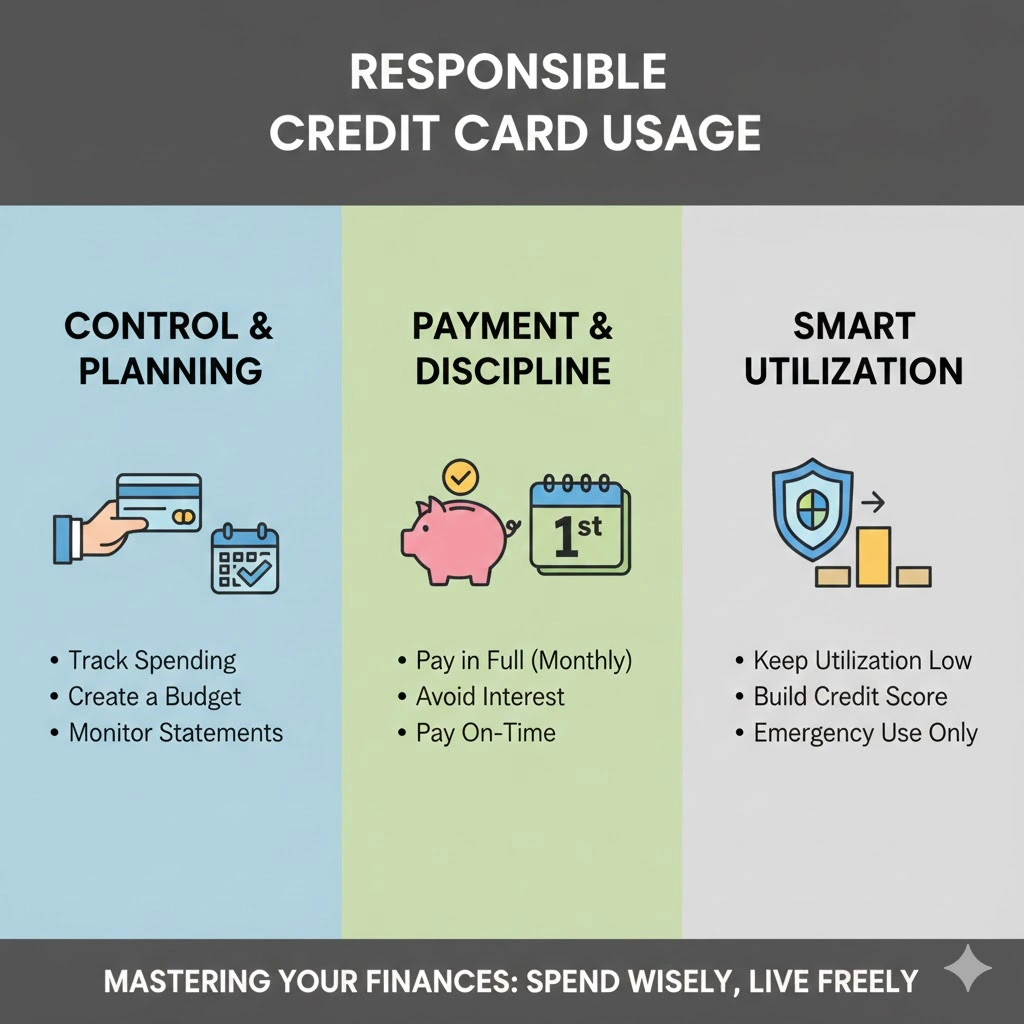
The difference between how a person would expect a credit card to work and how it actually works is key to understanding your finance usage.
It becomes a tool, not a trap.
Awareness leads to control.
FAQs
1. Do credit cards give free money?
- No They provide short-term credit
2.What happens if I miss a payment?
- Interest applies & Credit score reduces
3.Is paying minimum due enough?
- Not recommended , Interest continues
4.Can credit cards build wealth?
- Indirectly Through discipline and rewards
5.Are credit cards safe?
- Yes, if used responsibly Awareness is key