
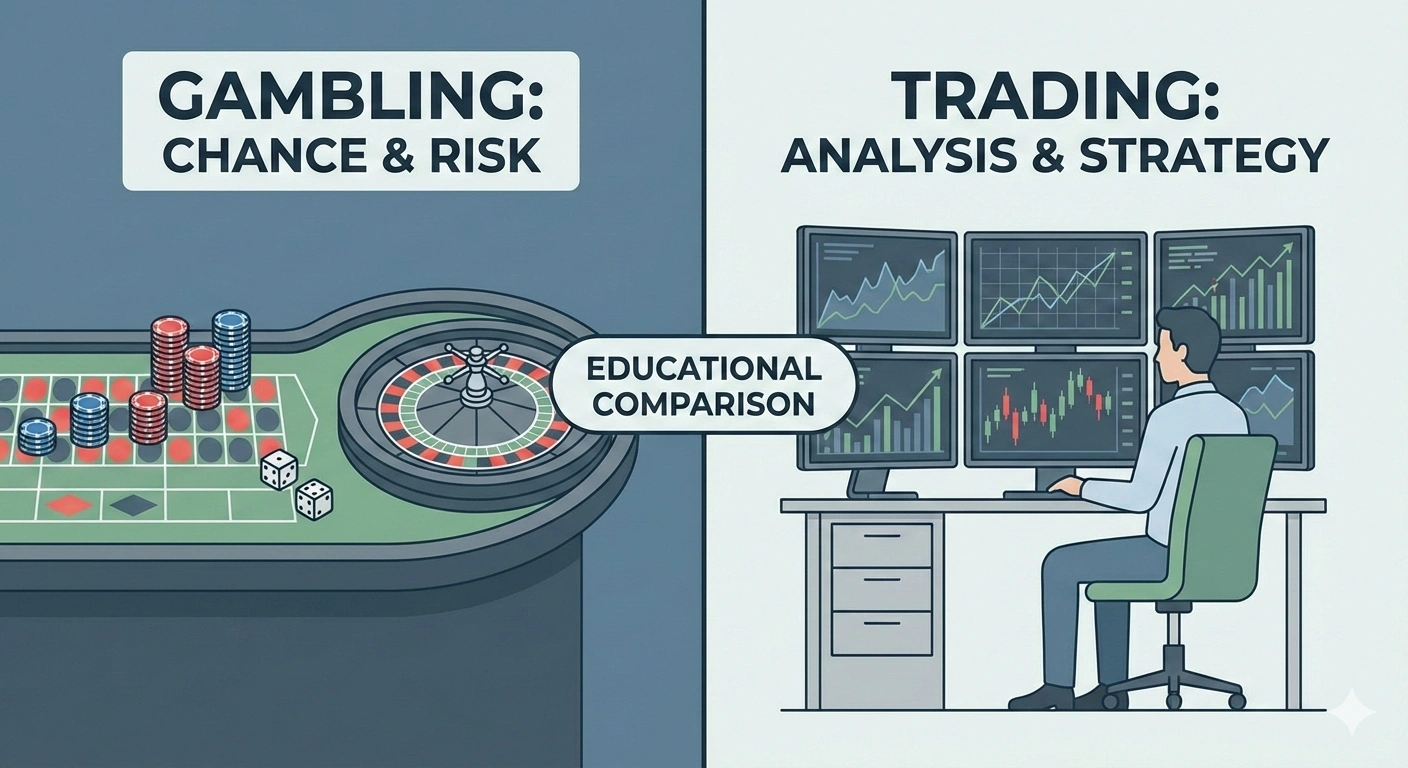
I have seen this confusion many times. Someone loses money in the market and says trading is gambling. Someone else makes profits and says trading is a skill. The truth sits calmly in between. Gambling and trading look similar on the surface, but deep down they are very different activities. Understanding this difference can completely change how you look at money, markets, and your own decisions.
Here, I will explain the difference between gambling and trading from the basics to an intermediate level, By the end, you will clearly know where you stand and how to move forward responsibly.

Gambling vs trading explained simply. Learn the key differences, mindset, risk control, and how trading becomes a skill, not luck.
What Is Gambling?
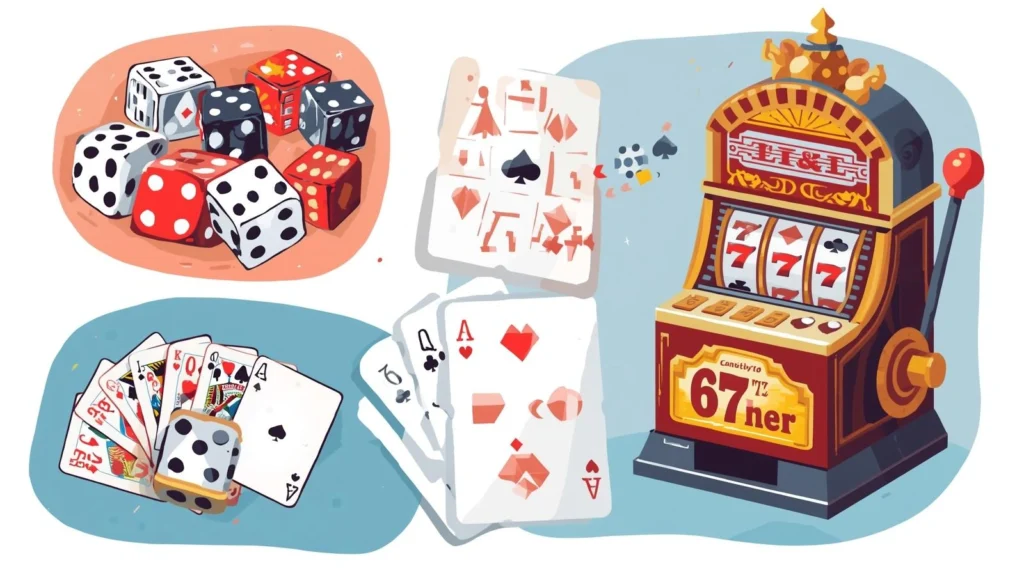
Gambling is the act of risking money on an outcome that is mostly based on chance. The result is uncertain, and the player has little to no control over what happens next.
Common gambling examples include:
- Casino games
- Betting on sports
- Lottery tickets
In gambling, the rules are fixed. The odds are designed in favor of the house. Over time, the system ensures that most players lose.
What Is Trading?
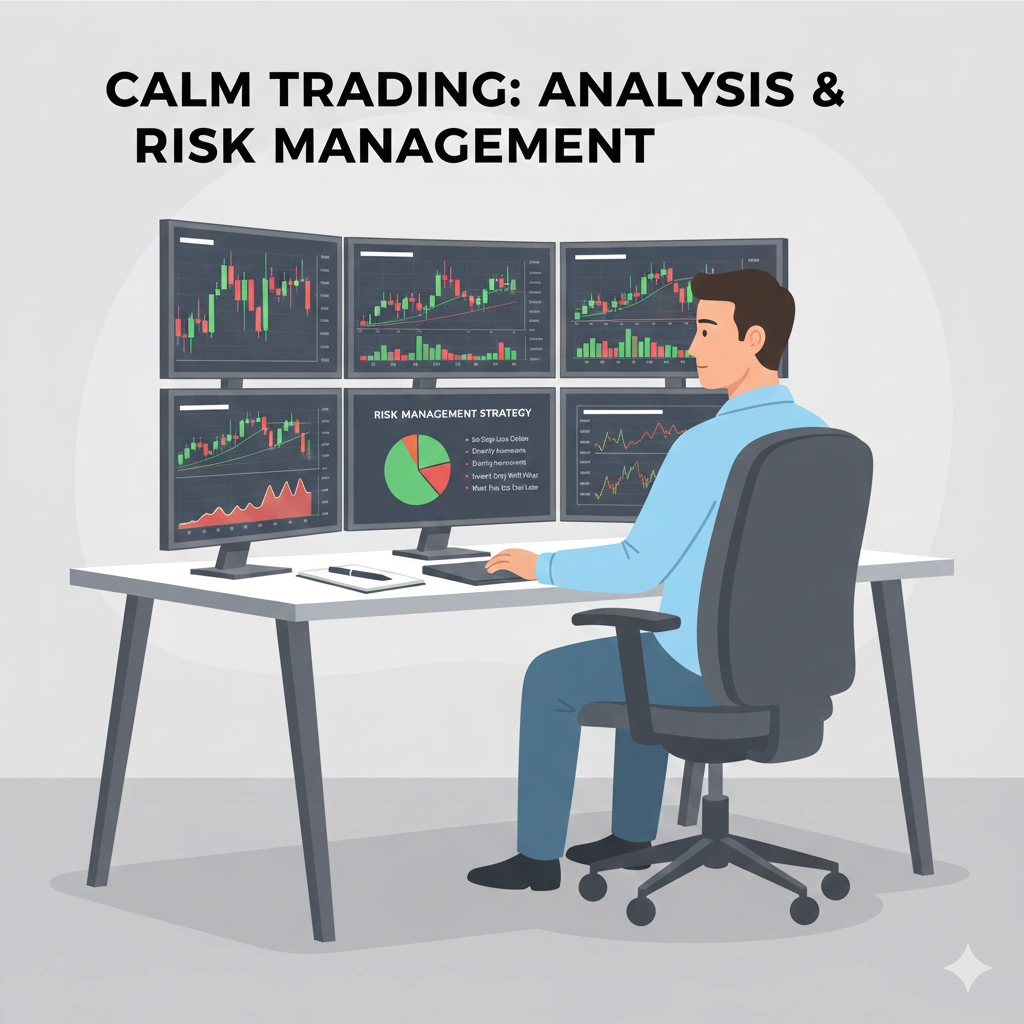
Trading is the act of buying and selling financial instruments like stocks, currencies, or commodities based on analysis, planning, and risk control.
Unlike gambling, trading involves:
- Studying price behavior
- Understanding market structure
- Managing risk deliberately
- Learning from past outcomes
Trading rewards discipline, patience, and consistency.
Gambling vs Trading: The Core Difference
The biggest difference lies in control and probability.
Gambling depends on luck.
Trading depends on preparation.
A gambler hopes.
A trader plans.
Both involve risk, but only one allows you to manage it.
Decision Making in Gambling
In gambling:
- Decisions are emotional
- Outcomes are random
- There is no long-term edge
A gambler may win today, but over time the math works against them.
Decision Making in Trading
In trading:
- Decisions are rule based
- Risk is predefined
- Probabilities improve with skill
A trader accepts losses as part of the process and focuses on long-term consistency.
Role of Skill vs Luck
Luck plays a major role in gambling.
Skill plays a major role in trading.
While luck can influence short-term results in trading, skill dominates over time. This is why experienced traders survive while gamblers disappear.
Risk Management: The Line That Separates Them
This is where the real difference appears.
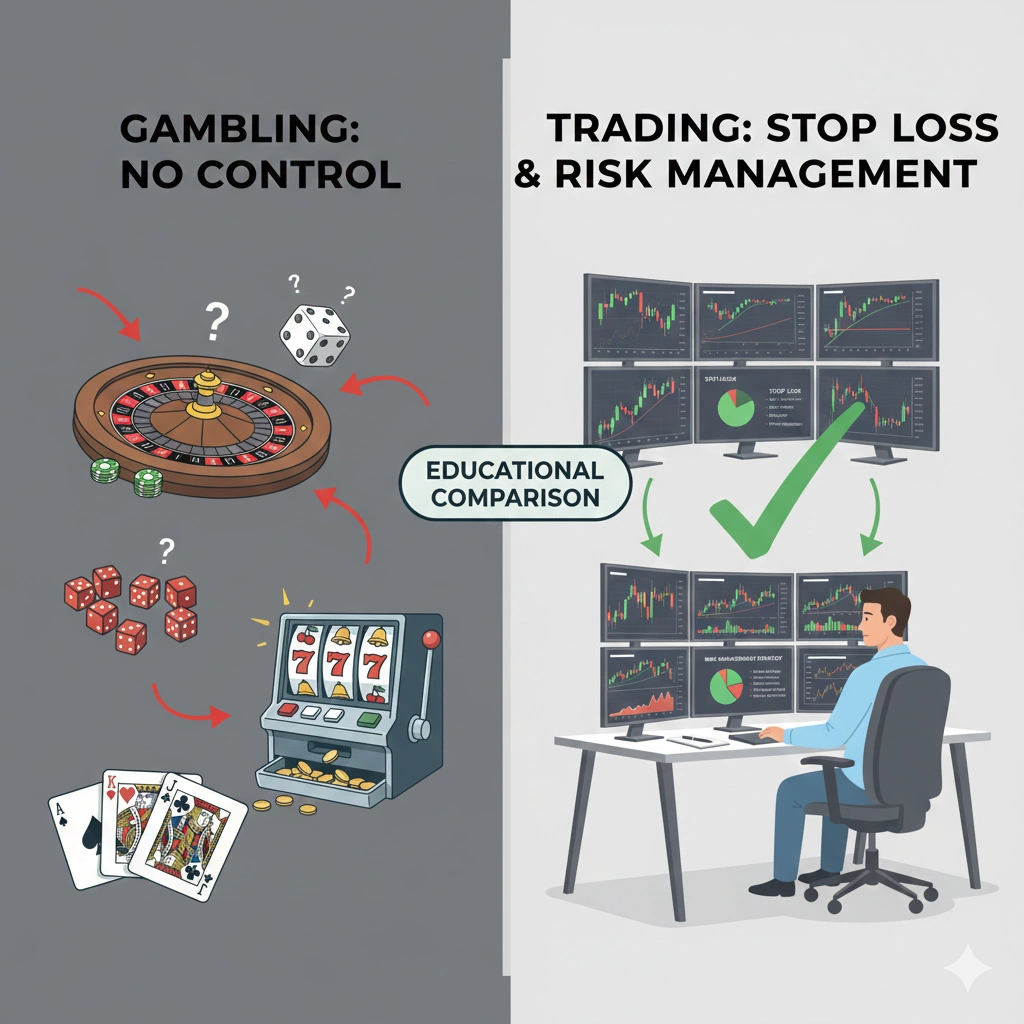
Gambling ignores risk management.
Trading is built on risk management.
In trading, you decide how much you are willing to lose before entering a position. In gambling, the loss is often uncontrolled.
Learn what is Risk management in Depth.
Gambling Mindset vs Trading Mindset
A gambling mindset looks like:
- Chasing losses
- Overconfidence after wins
- Emotional decisions
A trading mindset looks like:
- Accepting small losses
- Following a plan
- Staying calm under pressure
The mindset defines the outcome.
Why Many People Think Trading Is Gambling
Trading feels like gambling when:
- There is no plan
- Risk is ignored
- Emotions control decisions
When trading is done randomly, it becomes gambling. The activity does not change, the approach does.
How Trading Turns Into Gambling
Trading becomes gambling when:
- You trade without rules
- You over leverage
- You seek excitement, not consistency
At that point, charts become a casino table.
How Trading Becomes a Skill
Trading becomes a skill when you:
- Learn market structure
- Understand risk management
- Control emotions
- Track performance
Skill grows with discipline, not shortcuts.
Time Horizon Differences
Gamblers focus on immediate results.
Traders focus on long-term survival.
This shift in time perspective changes everything.
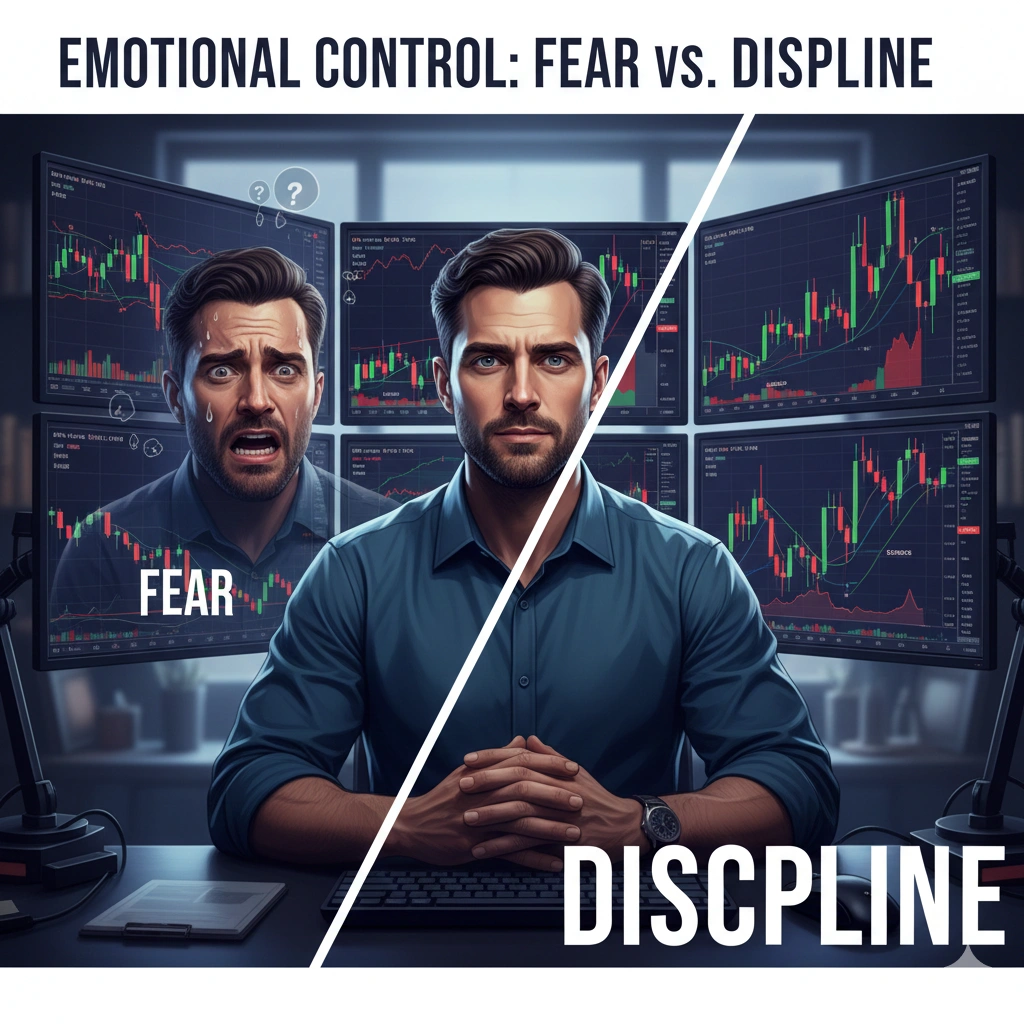
Trading Psychology Matters
Fear and greed dominate gambling.
Discipline and patience dominate trading.
Understanding your emotions is just as important as understanding charts.
Learn in more depth about Trading Psychology.
Trading Without Knowledge Is Gambling
This truth is uncomfortable but important.
Without education, trading becomes guessing. Guessing is gambling.
Knowledge turns randomness into probability.
Real Life Example
A gambler bets on a coin toss.
A trader waits for a setup, manages risk, and accepts outcomes calmly.
The actions look similar. The thinking is completely different.
Which One Is Right for You?
If you seek excitement, gambling may attract you.
If you seek growth, discipline, and self control, trading can become a skill.
The choice depends on your mindset, not the market.

Final Thoughts
The debate of Gambling vs Trading is not about money. It is about behavior.
Trading becomes gambling when done without rules.
Trading becomes a profession when done with discipline.
Respect risk. Learn patiently. Think long term.
Frequently Asked Questions
Is trading always better than gambling?
Trading is better only when done with knowledge and discipline.
Can trading feel like gambling at first?
Yes. Beginners often feel this until they learn structure and risk control.
Is loss common in trading?
Yes. Losses are part of the process, but they are controlled.
Can anyone learn trading?
Anyone can learn the basics. Discipline decides success.