
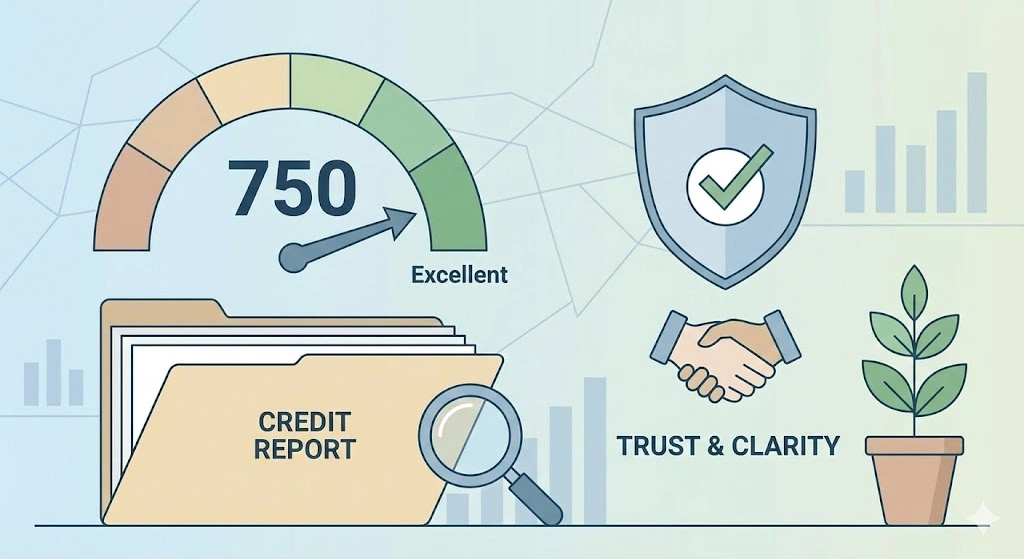
The day I discovered my credit score for the first time, I was confused. The score, not making any sound whatsoever, determined every decision regarding my loan, card, or even my interest rates. However, as time went by, I realized that my credit score had nothing to do with luck. It is actually about my financial behavior accumulated over time.

I can guide you from absolute basics to complete clarity, using examples, simple language, and a human approach. Fear is not the goal. Awareness and control are.
Understand credit score and credit report, how they work, how to improve them, and why they matter.
What Is a Credit Score?

Credit score : It is a three-digit number that shows lenders how creditworthy you are. It shows whether you are good at managing money.
In simple words, your credit score helps banks answer one question:
‘Is this individual able to repay money on time?’ The higher the score, the higher the trust. Lower score corresponds to higher risk.
Why Credit Score Matters in Real Life
Many credit decisions depend on your credit score.
- Credit Card Approval
- Personal loan approval
- Home loan interest rate
- Car loan eligibility
- Even rental agreements
at times A good credit score is quietly opening doors.
What Is a Credit Report?
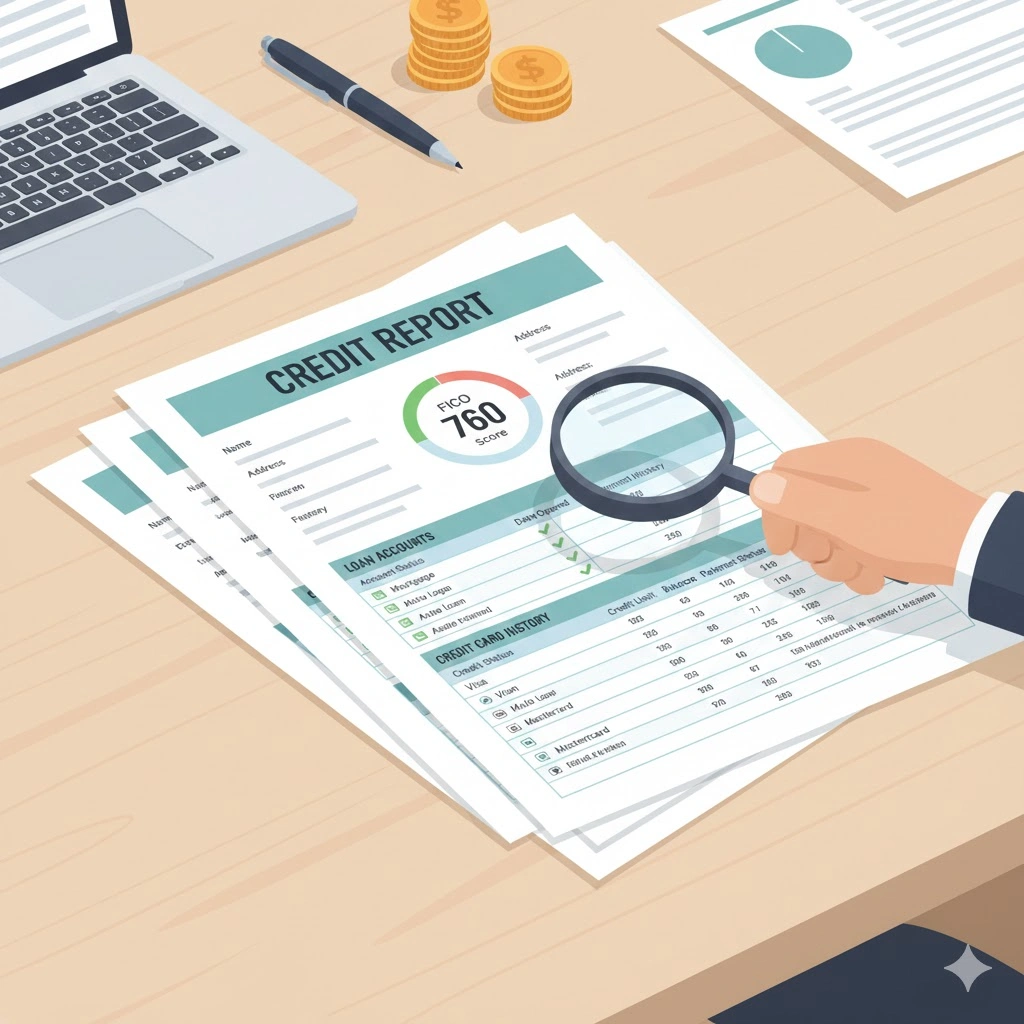
A credit report is a detailed record of your credit history. Your credit score is a number, but the credit report is the written story of the credit score.
Your credit report lists:
- Personal details
- Active loans and credit cards
- Payment history
- Defaults or Late Payment
- Credit Enquiries
Difference Between Credit Score and Credit Report
Many people confuse these two.
- Credit score represents a summary
- Credit report is the detailing
Think of the credit score as your exam result and the credit report as your answer sheet.
How Credit Score Is Calculated
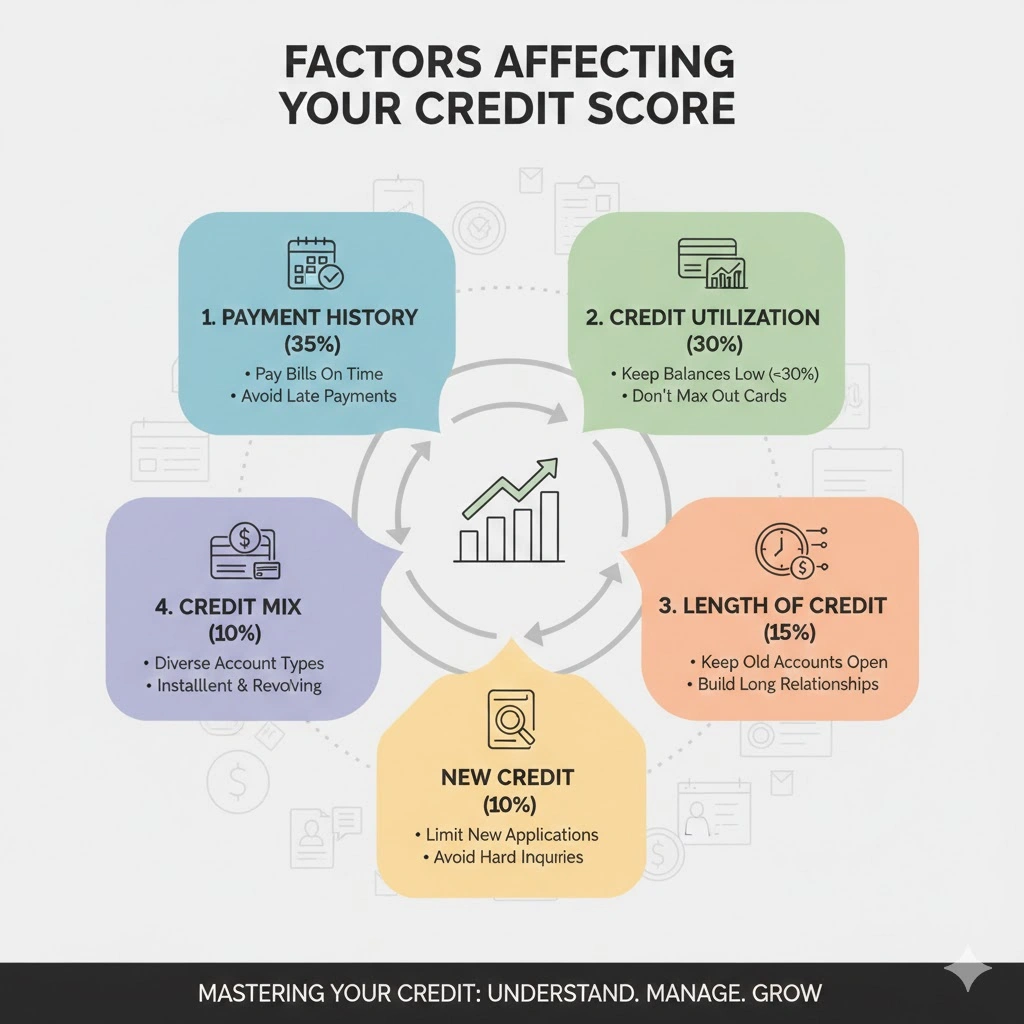
Several elements are used to compute a credit score.
1. Payment History
- This is the most important factor.
- Paying on time increases score
- Late payments reduce score
2.Credit Utilization
- This measures how much credit you are using, compared to your total credit limit.
- Exceeding 30 percent utilization can negatively affect your score.
3.Length of Credit History
- A longer credit history builds trust.
- Closing old accounts can also lower a credit score.
4. Credit Mix
- A healthy mix of secured and unsecured credits will help.
- Several elements are used to compute a credit score.
Learn Risk management so you can avoid Any type of loss in your journey.
5. Credit Enquiries
- Applying for too many loans or credit cards can temporarily lower scores.
Real World Example of Credit Score Calculation
Let’s think of two individuals with same income:
Person A pays bills on time. They only use 20 % of the limit on the credit card.
Person B defaults on payments and utilizes full credit limit.
Person A will have a significantly higher credit score, even if their income is the same.
How to Increase Credit Score Step by Step
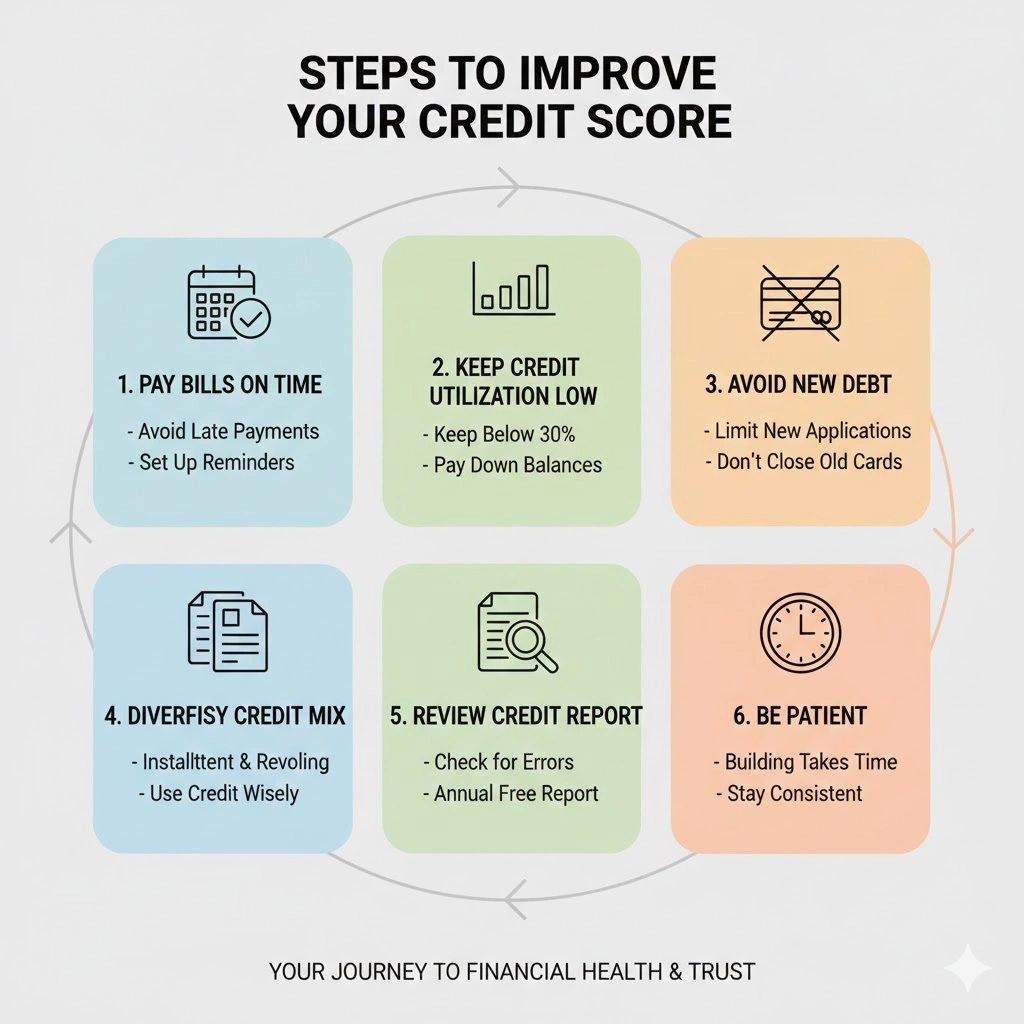
Better credit score is a process; there is no trick to it.
- Pay bills before due date
- Keep Credit utilization low
- Avoid unnecessary credit applications
- Old Credit Accounts
- Check credit report regularly
Consistency is more powerful than speed.
How Often Is Credit Score Updated?
Normally, credit score is updated once every month.
It depends on when the lenders report the information to credit bureaus.
One good month doesn’t undo all the mistakes of the year
How Often Is Credit Report Updated?
The way in which credit reports are updated also differs from one
Banks generally report their results on a monthly
Some delays are normal.
Patience matters.
Will Checking Credit Score on any Apps Reduce Score?

This is very common.
Different platforms may show different scores because:
- They use different credit bureaus
- Data update dates vary
- Scoring models differ
All scores move in the same direction over time.
Credit Score and Credit Cards Relationship
They (Credit Card) significantly impact the credit score.
- Timely payments improve score
- Minimum due payments affect score
- “High usage” results in a low score
Depends on your usage of Credit Card It can build or break your credit score.
Common Credit Score Myths
- Credit score improves overnight
- Closing old credit cards boosts score
- Higher income means a higher credit score
- A bad score lasts forever
All these are false.
What Is a Good Credit Score Range?
Generally:
- 750 and above – excellent.
- Good for 700 to 749
- 650 to 699 is average
- Below 650 needs improvement
How Long Does It Take to Improve Credit Score?
Higher score indicates more financial freedom.
Minor improvement may take months.
Major improvements may take years. Discipline also hastens the procedure.
How to Correct Errors in Credit Report
Sometimes errors can be found.
Steps to correct them:
- Download Credit Report
- Identify incorrect entries
- Raise dispute with credit bureau
- Follow up until resolved
Accuracy is important.
What Happens After Correction?
Once errors are corrected:
- Credit report improves
- Credit score changes gradually
“Change is not instant.”
Advanced Credit Score Tips
- Avoid Joint Loans Unless Necessary
- Space out credit applications
- Maintain a low debt-to-income ratio
Small habits compound.
Credit Score and Financial Discipline
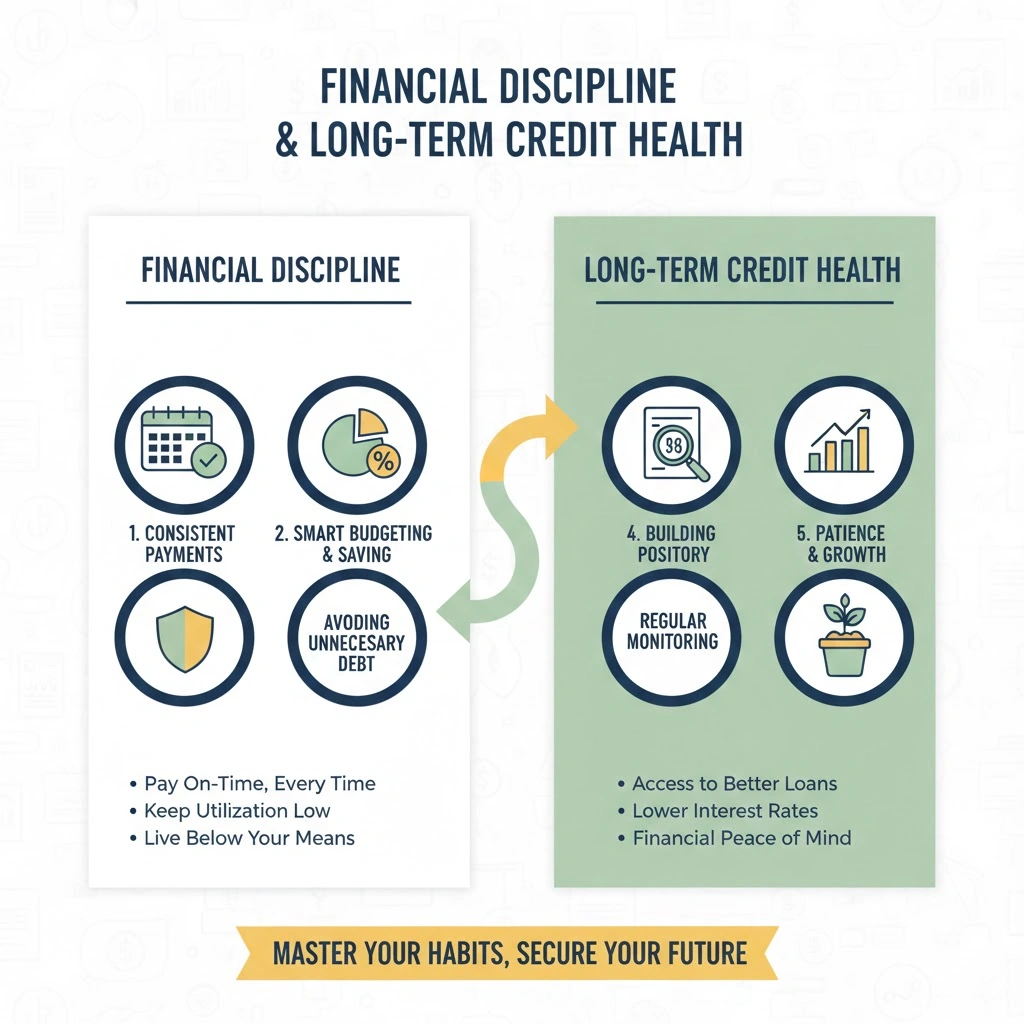
Your credit score measures your behavior.
It rewards discipline.
It punishes carelessness.
Awareness is power.
It’s important to maintain financial discipline while it comes to managing wealth.
Final Verdict
“Having a grasp on credit score and credit report is a key aspect that changes the way you think about money”
It is not about fear.
It is about confidence. When you respect credit, credit respects you.
FAQs
1. Does paying the minimum due improve a credit score?
- Partially Full payment is better
2.Can credit score revive from default?
- Yes With time and discipline
3.How many times can I check my credit score?
- Unlimited No Negative impact
4.Is credit score same across all bureaus?
- No Differences is normal
5.Can a salary alone positively influence one’s credit score?
- No Behavior matters more